UK
UK Ireland
 Scotland
 London

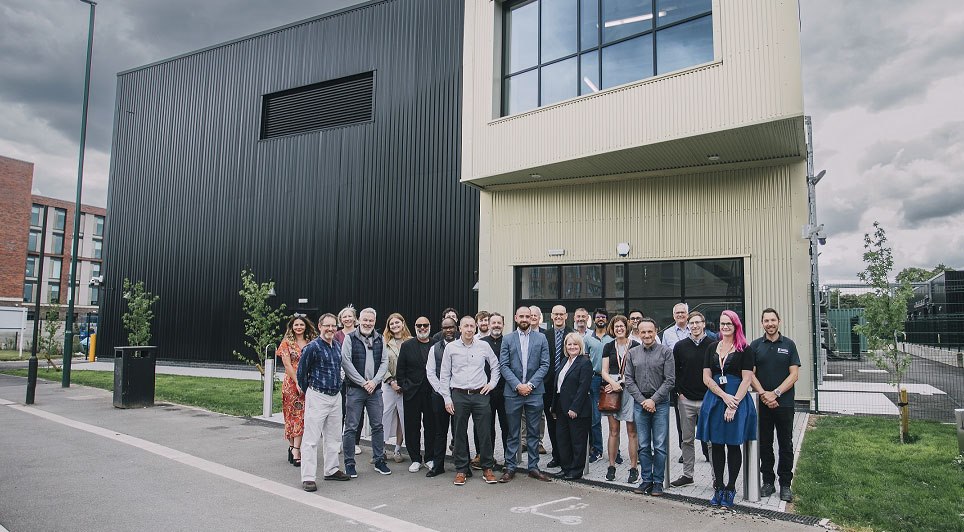
Midlands contractor G F Tomlinson has completed construction of the University of Nottingham's new Hybrid Propulsion Systems Building at Jubilee Campus, delivering a specialist research facility designed to support the development of next-generation clean propulsion technologies.
Completed this spring, the landmark facility will enable researchers to develop and safely test advanced propulsion systems for transport and power generation, supporting the UK's transition towards cleaner energy solutions.
The specialist laboratory includes cryogenic capabilities and environmental chambers designed for altitude testing, allowing the safe high-power testing of propulsion systems powered by gaseous hybrid, ammonia and other green fuels.
The facility will support research and innovation across sectors including aerospace, automotive, marine and power generation. It is also connected to the adjacent Power Electronics and Machines Centre (PEMC), providing access to megawatt-class physical testing capabilities.

Delivered by G F Tomlinson, the project involved the construction of a state-of-the-art steel-frame building with metal cladding, designed to complement the surrounding Jubilee Campus environment. The building features high-performance acoustic doors to manage operational noise levels, alongside integrated photovoltaic (PV) panels that generate renewable energy on site.
The facility has achieved a BREEAM 'Very Good' rating, reflecting the project’s focus on sustainability and energy efficiency.
The project was funded through round seven of Research England's flagship UK Research Partnership Investment Fund (UKRPIF), East Midlands Freeport, industry partners and the University of Nottingham. The investment supports the creation of a world-class research environment focused on future propulsion systems and green fuel technologies.
Throughout the project, G F Tomlinson worked closely with the university and local stakeholders to deliver a range of social value initiatives benefiting students, staff and the wider community.
The programme included 50 apprentice weeks on site, as well as work placements for two local college students who gained experience alongside the site management, surveying and design teams. Guided tours and presentations were also delivered for Civil Engineering and Architecture students from the University of Nottingham and Nottingham Trent University, supporting their learning and understanding of construction and design practices.
The project also delivered significant benefits for the local economy, with 97% of project spend taking place within a 40-mile radius of the site and 99% SME engagement. Sustainability measures included diverting 100% of site waste from landfill and completing more than 1,300 miles using low-emission vehicles.