UK
UK Ireland
 Scotland
 London

From wind turbines and radio base stations to substations, rail networks and lightning protection systems, reliable Earthing is essential for both operational performance and human safety.
However, concerns around defective earthing designs, Earth Potential Rise (EPR) and dangerous touch voltages are becoming increasingly common across modern infrastructure projects, as highlighted by Simon Gallagher, MD at UK Networks Services. This makes robust, engineered grounding solutions more important than ever. Luckily for you, the Elpress Deep Earthing System provides a modern, controlled and highly reliable approach to electrical grounding . Continue reading this blog to learn more about the system, soil resistivity, common applications and the key benefits of deep earthing technology.
What is an Electrical Earthing System?
Drive Down of the Elpress FS SystemAn electrical earthing system safely discharges fault current, lightning strikes and electrical surges into the ground, making it a critical safety mechanism in any electrical installation. A correctly designed system must provide low electrical resistance, stable voltage conditions, long-term corrosion resistance, and safe dissipation of fault current in the event of a fault or surge.
Earthing is used for a wide range of applications including personal protection, equipment and property protection, lightning protection systems, and surge and electromagnetic protection. In high-risk environments such as substations, wind farms and telecommunications networks, poor earthing design can lead to equipment failure, unstable system performance and dangerous touch voltages.
What is electrical earthing - Read the full blog
Soil Resistivity and Why It Matters
One of the most important factors affecting earthing performance is soil resistivity. Soil conditions can vary significantly depending on moisture content, temperature, frost conditions, soil composition and seasonal weather changes. Surface soils are particularly unstable, with conductivity heavily influenced by rain, freezing temperatures and dry weather.
In contrast, deeper soil layers typically provide higher moisture content, more stable salinity levels and more consistent conductivity throughout the year. This is one of the main reasons why engineers increasingly choose deep earthing systems for modern infrastructure projects where stable, long-term grounding performance is essential.
This contrast between surface and deeper soil conditions is critical when designing reliable earthing systems. By reaching more stable conductive layers, deep earthing reduces the impact of seasonal variation and helps maintain consistent performance throughout the system’s operational life.
Surface Earthing vs Deep Earthing
Traditional surface earthing systems are highly dependent on environmental conditions, which can cause resistance levels to fluctuate throughout the year. Factors such as seasonal weather changes, frost conditions and dry surface soil can significantly affect conductivity, while shallow installations often struggle to access stable conductive layers.
Deep earthing systems overcome these limitations by driving electrodes into deeper, more stable soil conditions, often close to groundwater level where moisture content and conductivity remain more consistent. This results in more stable earth resistance, reduced environmental influence and improved long-term reliability.

The Elpress Deep Earthing System Explained
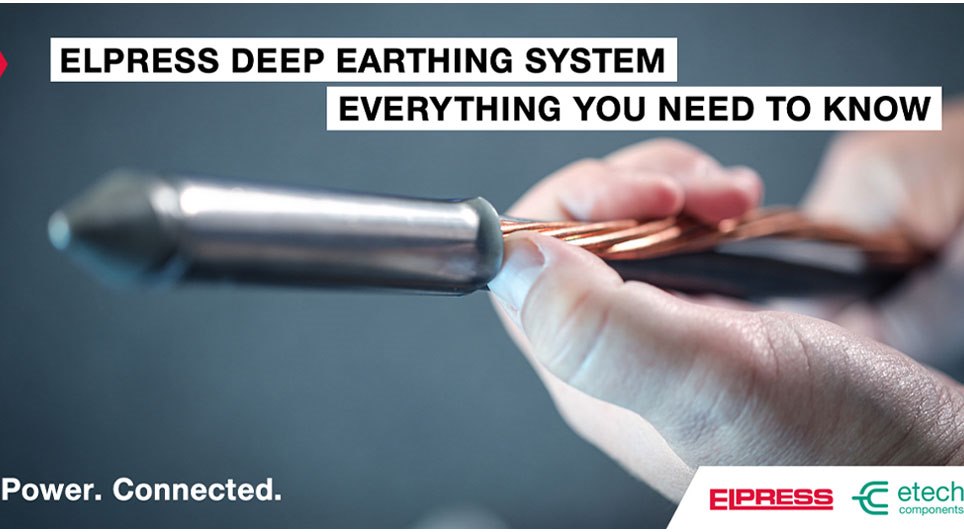
The Elpress Deep Earthing System is a modular grounding solution designed for the safe and controlled installation of deep earth electrodes. The system combines a hardened steel tip, leading rod, extension rods, driving sleeves or studs, and a copper earthing wire supplied by wholesalers. Using steel rod extensions, installers drive a continuous copper conductor deep into the ground, giving them stable installation conditions and full control throughout the process.
One of the key advantages of the grounding solution is that it eliminates joints within the underground conductor, reducing potential failure points while improving long-term reliability. The design also enables continuous earth resistance monitoring during installation and uses steel components as sacrificial corrosion protection for the copper conductor, all within a simple, low-component system.
How the Elpress Deep Earthing System Works in Practice
The installation process is simple, controlled and measurable. Installers insert the copper conductor into the steel tip, while the leading rod locks it securely in place. As the system moves deeper into the ground, installers progressively add extension rods, typically using power hammers to assist the installation process.
Throughout the process, installers continuously monitor earth resistance to track performance in real time and confirm that the grounding conditions remain suitable. Once installers achieve the target resistance level, they stop the installation process and remove the top rod for re-use. This approach allows installers to optimise depth based on actual soil conditions rather than relying on estimates or assumptions.
Monitoring, Safety and Engineering Benefits
One of the key advantages of the system is continuous earth resistance monitoring during installation. This allows installers to achieve the correct grounding depth, prevent unnecessary over-extension, and validate ground conditions in real time.
Corrosion protection is also an integral part of the system, as the steel rods act as sacrificial anodes when copper conductors are used, protecting the copper and extending overall system lifespan. In addition, the system is aligned with key industry standards such as IEC 62305-3 for lightning protection systems and SS-EN 50164-2 for earthing component requirements, ensuring safe and reliable performance in demanding electrical environments.
Elpress Deep Earthing System Benefits - Read The Blog Here
Applications and Product Range
Engineers use the Elpress Deep Earthing System across critical infrastructure sectors including wind turbine grounding systems, radio base stations, electrical substations, rail infrastructure, switchgear / transformer installations, and lightning protection systems.
The system is built around a modular FS range of components, including FS11 and FS12 steel tips, FS21 leading rods, FS31 extension rods, FSHD heavy-duty variants designed for hard ground conditions, FS61 impact studs, FS62 impact sleeves, and the FS41 withdrawal handle.
These components allow installers to adapt the system to a wide range of soil conditions, from soft ground through to rocky terrain, ensuring flexibility across different installation environments. Supplied in the UK by E-Tech Components, the system provides a practical and reliable solution for modern grounding challenges.
Frequently Asked Questions
What is the Elpress Deep Earthing System?
It is a modular deep grounding solution that installs a continuous copper conductor into deeper soil layers for stable electrical earthing performance.
Why is deep earthing better than surface earthing?
Deep earthing reaches more stable soil conditions with less variation from weather, resulting in more consistent earth resistance.
How does soil resistivity affect earthing systems?
Soil resistivity determines how easily electrical current can be discharged into the ground. High resistivity soils require deeper or more engineered grounding solutions.
What is continuous resistance monitoring?
It is the ability to measure earth resistance during installation, allowing installers to stop at the optimal grounding depth.
Where is the Elpress system used?
It is used in wind farms, substations, rail infrastructure, telecommunications sites and lightning protection systems.
Does the system reduce corrosion risk?
Yes. Steel components act as sacrificial anodes, helping protect the copper conductor and extend system life.
Electrical infrastructure is now far more complex and fault-sensitive than in the past, driven by the growth of renewable energy, transport electrification, dense telecommunications networks and interconnected power distribution systems. In these environments, earthing is no longer a background design consideration but a critical factor in system safety, resilience and compliance. However, as soil conditions, installation environments and engineering standards continue to vary, traditional grounding approaches can struggle to deliver consistent long-term performance, particularly where Earth Potential Rise (EPR), touch voltage control and seasonal soil resistivity changes must be managed.
The Elpress Deep Earthing System addresses these challenges through a controlled and engineered installation method that combines a continuous copper conductor, modular driven rods and real-time earth resistance monitoring. By enabling installers to verify and optimise grounding performance during installation, it delivers a more predictable, stable and verifiable earthing solution for demanding infrastructure applications. In an industry where safety, compliance and operational reliability are non-negotiable, deep earthing is no longer optional. It is essential, and Elpress provides a proven way to achieve it.