UK
UK Ireland
 Scotland
 London


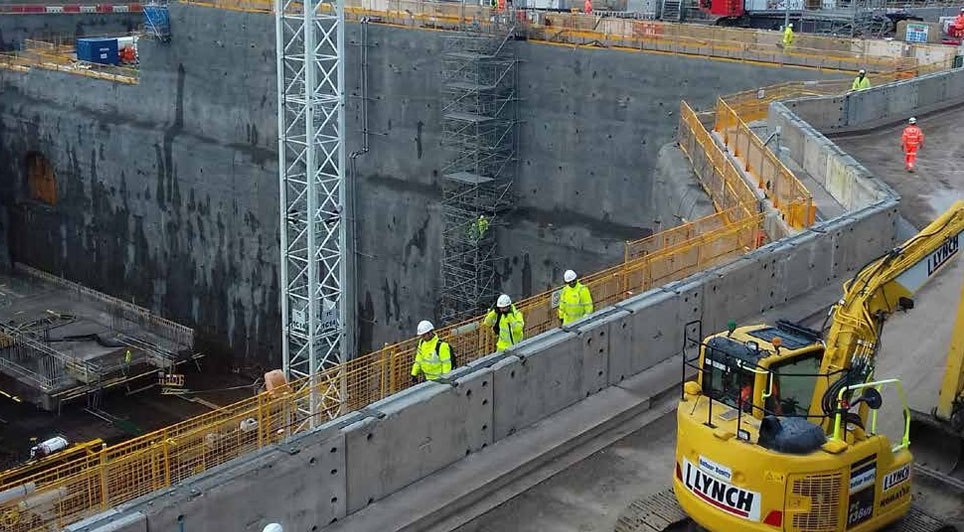
Construction is a key pillar of the UK economy, but the industry faces a wide range of risks that can make managing projects uniquely challenging. From high workplace injury rates to frequent cases of asset theft, leaders and contractors face a complicated threat landscape.
To help ensure projects are completed safely and efficiently, operators require continuous visibility into site-wide activities. In this post, we explore how contractors are reducing risk on modern projects with support from smart security technologies and organisational practices.
Common Risks on Modern Construction Sites
The exposed and complex nature of construction sites can make workers and equipment uniquely vulnerable to serious safety and security risks. Below are some examples of the types of threats commonly faced by contractors when working on modern construction sites.
• Workplace Injuries: 22% of construction workers have been harmed on-site in recent years; making construction one of the most affected industries by this issue.,
• Equipment Theft: Valuable assets like tools, heavy machines and building materials are prime targets for theft, with such incidents costing the industry £1 billion per year.
• Trespassing and Vandalism: Vandals often break into sites after hours to cause criminal damage; 91% of site managers have experienced vandalism in recent years.
How Contractors Are Reducing Risk Across Modern Projects
To proactively address common risks across modern projects, managers and contractors are exploring the use of intelligent technologies and novel organisational practices. By improving visibility into daily operations and restricting access to high-risk, valuable equipment, leaders can effectively deter criminality and prevent safety hazards from impacting on-site personnel.

Smart Surveillance Systems
Modern IP cameras installed to cover high-risk areas offer managers continuous visibility over complex sites. Operators can access real-time feeds 24/7 via any secure smart device to both monitor working conditions and check in on valuable assets after hours, with many devices leveraging special ruggedised casings to protect against impacts and poor weather.
Contractors are increasingly using AI-powered IP cameras to improve their threat detection capabilities. AI software can autonomously detect and warn operators of common risks like suspicious motion, PPE misuse and vehicles moving in the wrong direction, as well as use machine learning to detect anomalous risks by understanding expected activities over time.
Wearable Safety Technologies
Wearable IoT sensors can be issued to workers to help identify and action health and safety risks. Devices can be programmed to detect air quality issues, excessive heat, impacts and distress calls, then send live alerts to site managers via SMS requesting a relevant response.
A 2018 study published by the U.S. federal government found that wearable safety sensors could prevent as many as 34% of fatalities in the construction industry. By providing workers with these safety solutions, managers can reliably monitor working conditions remotely and review data-rich reports to help inform practical improvements to high-risk on-site processes.
Modular Construction Methods
Many contractors are transitioning towards modular construction methods to help minimise risks associated with material theft and workplace injuries. By prefabricating key sections of buildings in controlled factory environments, contractors can minimise the amounts of raw materials and stealable assets stored on-site to make worksites less attractive to criminals.
Prefabrication can also reduce workers’ exposure to hazardous tasks, helping to minimise workplace injuries while streamlining on-site operations. Data suggests modular construction methods can help to reduce project costs by 20% and completion times by as much as 50%.
Predictive Analytics Solutions
Predictive analytics is enabling managers and contractors to proactively address risks by predicting their occurrence via historic data analyses. Systems can analyse past incident reports, jobsite information and weather reports to forecast likely issues before their impacts are felt, enabling site managers to implement effective site-specific protections preemptively.
Modern solutions that use machine learning can be particularly effective at predicting the severity of safety risks, demonstrating accuracy rates as high as 89%. By combining these tools with practical risk management strategies, site-wide safety measures can be improved.
Conclusion
Common risks across construction sites can delay projects, cause harm to workers and raise operational costs. With support from the above-mentioned solutions and strategies, modern contractors are proactively reducing risk across worksites to help improve project outcomes.