UK
UK Ireland
 Scotland
 London

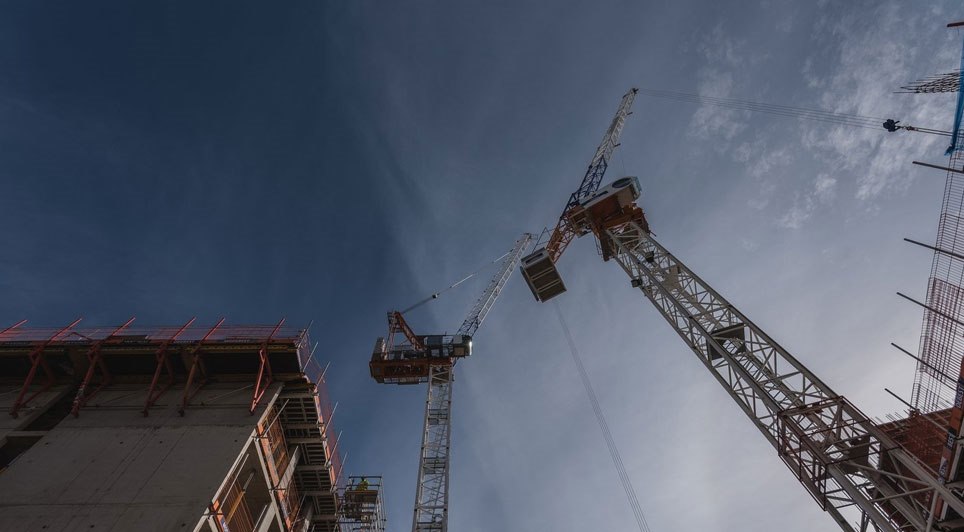
HS2 is making significant progress at Euston, as work continues behind the hoardings to make way for Britain's new high-speed railway.
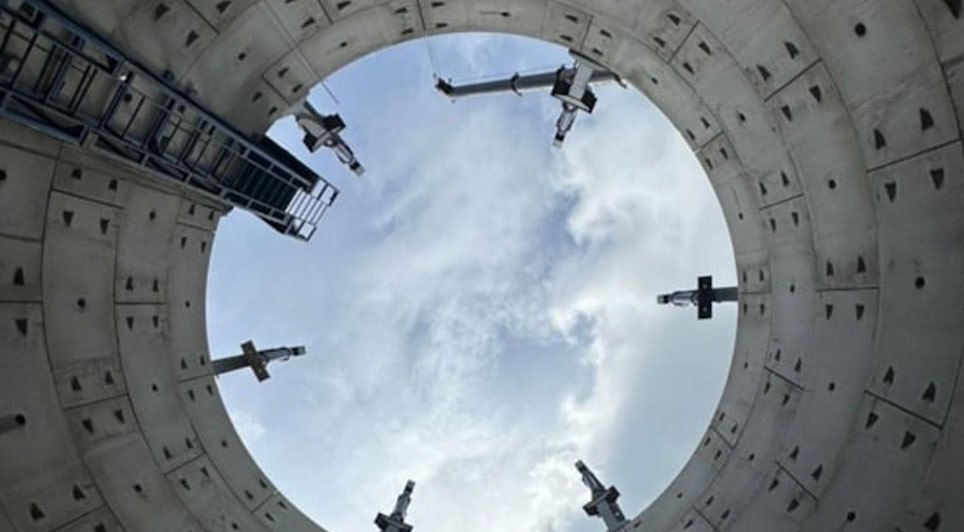
To create space for the new HS2 station, HS2's station contractor, Mace Dragados JV (MDjv), has excavated a 20-metre deep 'box' that will be home to a new Traction Substation (TSS). Traction substations are used to convert electrical power to a form suitable for a rail system. This TSS will enable the relocation of equipment needed to provide services and ventilation for the safe operation of the Northern Line at Euston.
Connecting this highly-secure new Traction Substation – dubbed the 'sugar cube' due to its eye-catching white tiled exterior – to the London Underground network is a 90-metre long – as long as the Statue of Liberty laid down - 6.5-metre wide tunnel running under the HS2 construction site.

The work to construct the tunnel took 16 months and saw the MDJV team sink a 20-metre deep shaft before carving out the underground passage and coating it with a primary sprayed concrete lining (SCL). After applying waterproofing, the team reinforced the tunnel with steel and concrete to give it the strength and structure needed ahead of the construction of the HS2 Station that will be taking place above it.
MDjv, supported by its principal sub-contractors Cementation Skanska, Careys and JGL, brought forward innovations to improve the environmental credentials of the works. Redesigning the tunnel to lower the carbon impact during construction – through reduced material and water use, a reduction in vehicle movements, and a lower energy consumption – resulted in an overall carbon saving of 140 tonnes, while efforts to reuse material already on site resulted in over 1,000 fewer lorry movements and an associated saving of 76 tonnes carbon dioxide from vehicle emissions.
With the tunnelling and excavation works at the site now complete, the team will be working to construct the below and above ground structures for the new Traction Substation, before fitting it out with the necessary equipment and connecting it to the Northern line. The building will have three storeys below ground and four above.