UK
UK Ireland
 Scotland
 London

The National Home Improvement Council (NHIC) is receiving reports from some householders that renewable energy technologies, such as solar panels and wind turbines, are being offered by reputable suppliers without first making sure that the dwelling is insulated up to the required standard.
Director of the NHIC, Andrew Leech, said: "There seems to be an increasing number of instances where renewable energy systems like solar thermal panels and wind turbines are being offered to homeowners whose property is not fully insulated.
"Obviously these technologies can help reduce people's carbon footprints but their contribution to overall energy efficiency cannot be maximised, unless the home is insulated to the required standard.

"It is a false economy to invest lots of money installing an efficient, sophisticated renewable energy system if the envelope of your home is unable to contain all the benefits the system has to offer."
For instance, it is widely accepted that at least a quarter of all the money spent on home heating is wasted due to poor insulation. And of that loss, 25% is through the roof and 33% is lost through the walls. By properly insulating the loft and cavity walls a householder can save up to £365 a year.
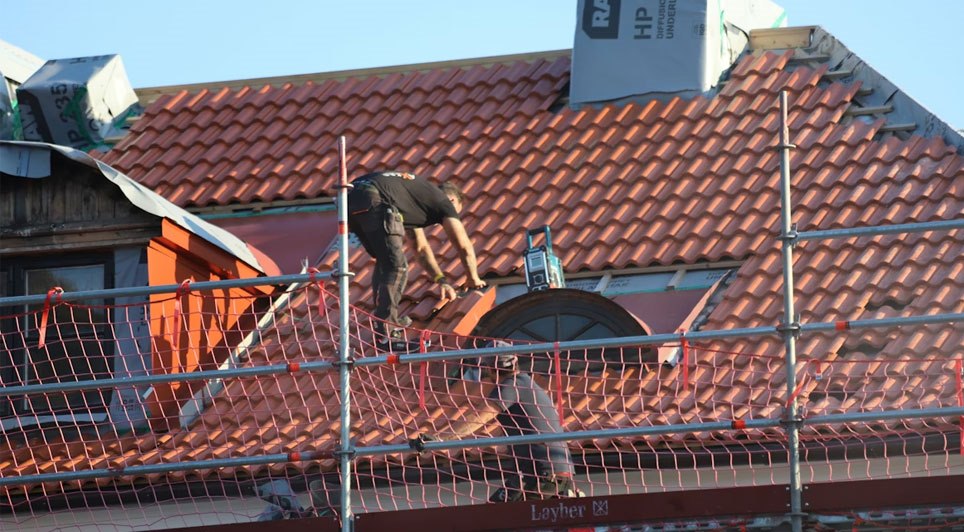
Mr Leech said: "So, before you even think about installing a renewable energy system it's crucial that there is a minimum 270mm thickness of insulation in your loft and any other roof area, such as bay windows.
"And if you live in a house build after the 1920s your walls will have cavities between the inner and outer masonry leaves. You can make your home much more cosy and energy efficient by filling the cavity with insulation."
If you live in a pre-20s home which does not have cavity walls there are other ways to enhance the thermal efficiency of the walls.
Special insulation can be applied to the outer leaf or there are new nanotechnology products to cover internal walls.
Grants are available for this type of work to be carried out.
(CD/BMcc)