UK
UK Ireland
 Scotland
 London


The UK construction industry needs around 206,000 additional workers between 2026 and 2030.
The obvious response is to recruit.
The problem is that every contractor is looking for the same experienced tradespeople, supervisors and managers. More job adverts do not create more skilled workers. They increase competition for the people already available.
Construction needs new entrants, but contractors cannot wait years for the workforce to catch up. The fastest answer may be the people already working on their sites.
They have the experience. They can do the job. What many lack is the recognised qualification to prove it.
The skills gap is already affecting contracts
The construction skills shortage is often discussed as a future problem. It is already affecting which contracts businesses can bid for, how quickly they can mobilise and whether they can prove their workforce is competent.
Clients and principal contractors increasingly expect evidence. Depending on the role, that may include occupational NVQs, the correct CSCS card, supervisory qualifications or specialist retrofit credentials.
Industry Accreditation has closed. Cards issued through the route have expired, and nationally recognised qualifications now underpin construction card schemes.
Experience still matters. However, when a tender asks for evidence of competence, saying that somebody has done the job for 20 years may not be enough.
A contractor can have the people to deliver the work and still lose the opportunity because the evidence is missing.
Qualifications are no longer just a training issue. They are part of workforce planning and bid strategy.
Retrofit will expose the gap further
Retrofit, insulation and energy-efficiency work will put more pressure on the workforce.

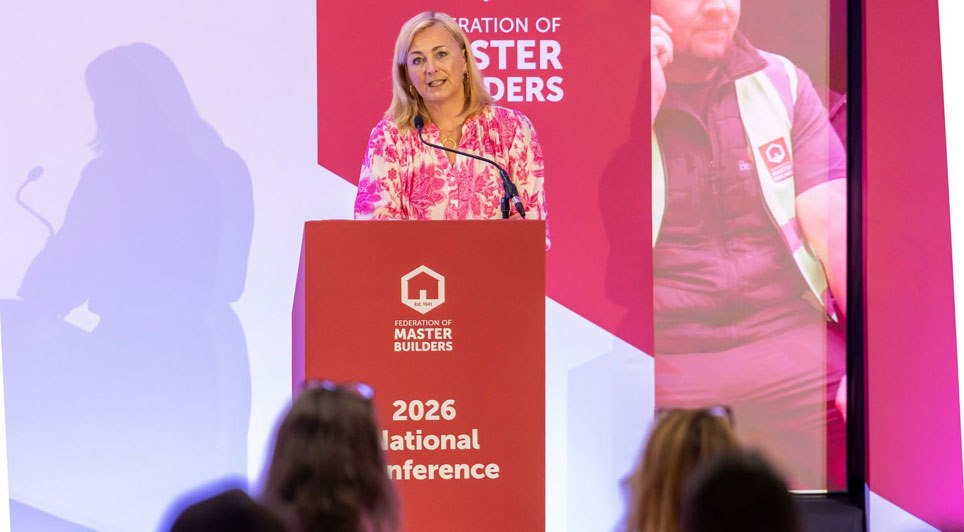
In July 2026, CITB and the Federation of Master Builders launched a Retrofit Sector Skills Plan focused on competence, clearer standards, better training and quality assurance.
That matters because poor retrofit can damage buildings as well as reputations. Insulation, ventilation and moisture interact. Older and traditionally built properties need people who understand how those systems work together.
The issue is not simply whether there are enough people to complete the work. It is whether there are enough competent people to complete it properly and prove that competence.
Contractors looking to expand into retrofit cannot treat qualifications as paperwork to deal with after winning a contract.
By then, it may be too late.
Why recruitment is only part of the answer
The industry needs apprentices and new workers. Nobody disputes that.
However, there is a considerable gap between recruiting somebody and having an experienced worker who can operate independently on site. Experienced recruits are also difficult to find because every employer is searching in the same market.
Contractors should ask two questions:
Who do we need to recruit?
Who do we already employ who could become formally qualified?
The second question is often overlooked.
Is your next qualified worker already on site?
Many experienced construction workers already have the occupational skills required for an NVQ. They do not need to return to a classroom to learn a trade they perform every day.
Through Construction NVQs, competence can be assessed using workplace evidence, professional discussions and on-site observations while employees continue working.
Instead of competing to recruit somebody who already holds the right qualification, a contractor can identify capable people within its workforce and formalise the skills they already use.
The same applies to retrofit and insulation qualifications. An experienced installer may already complete cavity wall, loft, underfloor or external wall insulation. The missing piece may be the qualification that confirms their competence and supports the correct card route.
This is not about putting everybody on a course. It is about auditing the workforce properly.
Which qualifications do upcoming contracts require? Which employees already have the experience? Where are the gaps between practical ability and documented competence?
For businesses targeting insulation work, an NVQ in Insulation and Building Treatments can turn site experience into a recognised qualification without taking the worker away from the job for long periods.
Stop treating qualifications as an emergency
Too many businesses check cards and qualifications after a contract has been awarded.
That is when training becomes urgent, expensive and disruptive.
A better approach is to map likely projects against the workforce before the tender goes in. Identify the roles needed, check which qualifications and cards apply, and fill the gaps early.
The UK construction skills shortage will not be solved by another recruitment campaign.
But individual firms can make themselves less vulnerable to it.
Before placing another job advert, look at the people already on site.
Your skills gap may not be a shortage of ability.
It may be a shortage of evidence.