UK
UK Ireland
 Scotland
 London

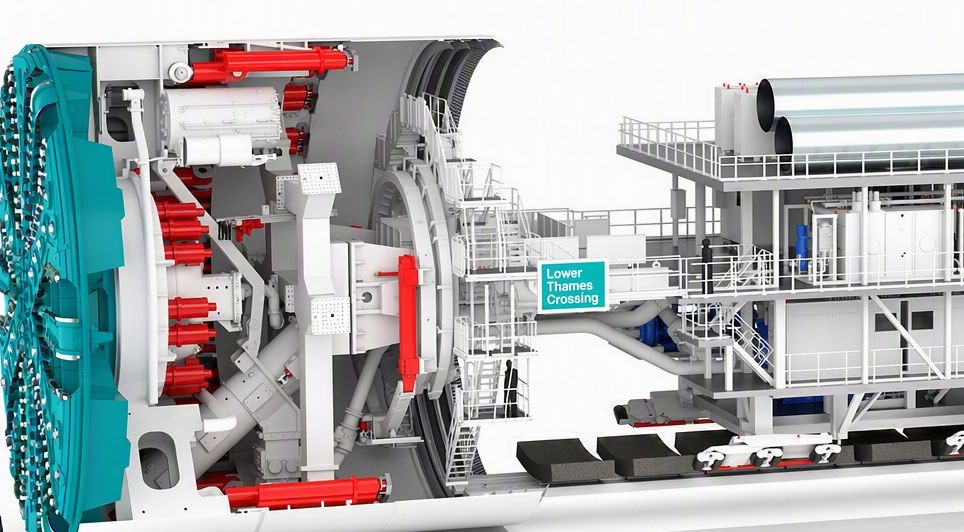
National Highways has chosen the builder of a 16.4m-diameter tunnel boring machine (TBM) for the Lower Thames Crossing, marking a major milestone for the scheme to deliver the UK's longest road tunnel.
The TBM is due to arrive on site and begin work in 2028, with the new road targeted to open in the early to mid-2030s.
The machine will be the largest ever used in Europe and the third biggest globally. Measuring around 120 metres in length and weighing over 5,000 tonnes, it will excavate two parallel tunnels, each large enough for three lanes of 70mph traffic and more than twice the diameter of the Dartford tunnels.
The crossing aims to double road capacity across the Thames to the east of London, reducing chronic congestion at Dartford and boosting connectivity to create a new trade corridor linking ports in the South East with the Midlands and the North.

Given its scale, the TBM will be shipped to the UK in sections, transported up the Thames and landed at the Port of Tilbury before assembly on site.
The project team said the Lower Thames Crossing is being designed to be the “greenest” road possible, with a focus on cutting embodied carbon and minimising environmental impact. A tunnel was selected instead of a bridge to reduce effects on nearby communities and protected wetland bird habitats. About 80% of the 14.3-mile route will be in tunnel, in cutting, or behind embankments to help it blend into the landscape.
Measures such as using low-carbon concrete for the tunnel lining and optimising the design to build less are intended to help the scheme become the first major infrastructure project to be carbon neutral in construction.
The TBM will be manufactured in Germany by Herrenknecht, whose machines have been used on the Elizabeth Line, the Silvertown Tunnel, HS2 and the Thames Tideway projects. It will be procured and operated by the Delivery Partner, Bouygues TP Murphy Joint Venture.
Engineered as a variable density TBM, the machine will manage groundwater and mixed geology, including clay and chalk, up to 60 metres beneath the Thames. It will be powered by electricity from renewable sources. A single TBM will dig both bores to save cost and carbon: it will start near the Port of Tilbury in Thurrock in 2028 and then be turned to complete the second tunnel.