UK
UK Ireland
 Scotland
 London

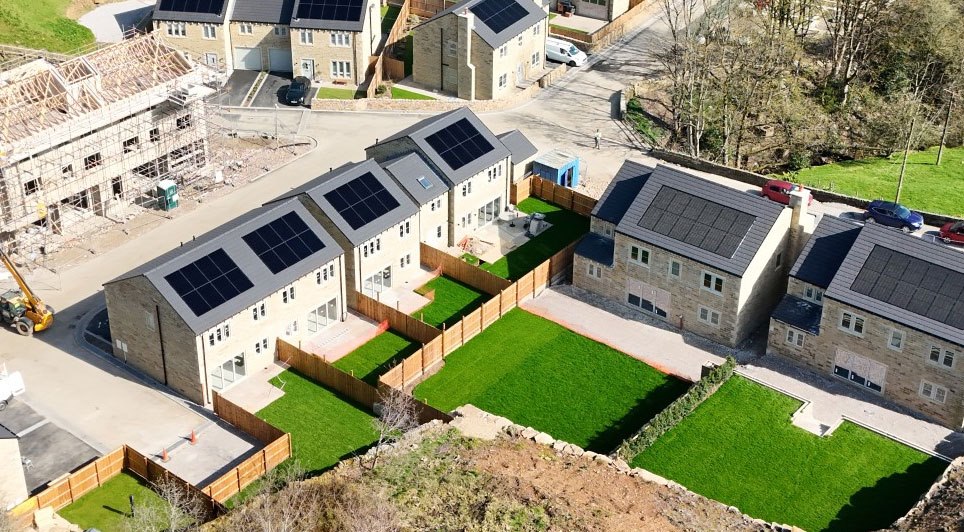
Dudleys Consulting Engineers has played a key role in the successful redevelopment of a historic dyeworks site near Huddersfield, supporting its transformation into a sustainable residential scheme while helping to increase the saleable value of much-needed new housing in the area.
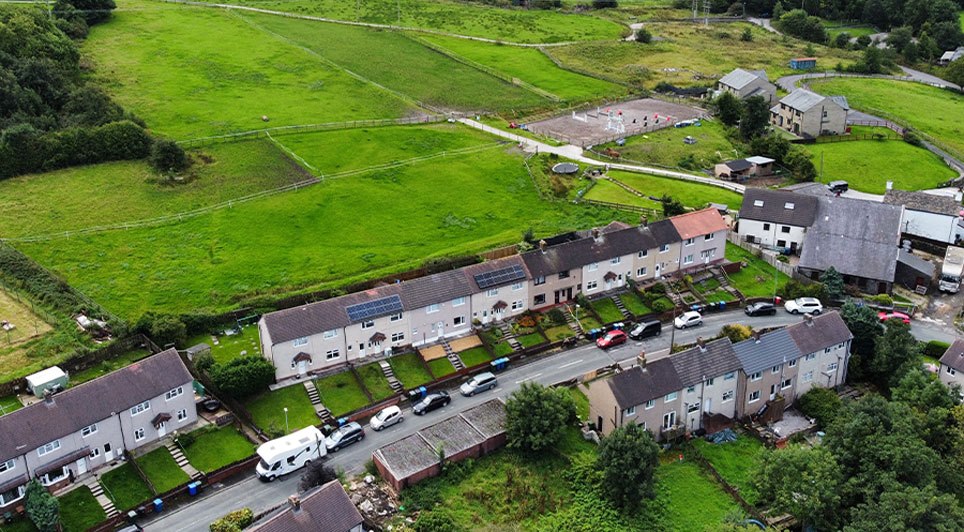
The redevelopment, known as Royd Edge Mills, is a bespoke residential development located near the village of Meltham on the edge of the Peak District. The scheme has delivered 30 new homes, ranging from two-bedroom apartments to five-bedroom detached houses. The first and second phases are already occupied, with the third and final phase now nearing completion.
The site dates back to the late 1830s, when it was originally established as a mill powered by water drawn from Royd Edge Moor via Thick Hollins Dyke. It later became a thriving dyeworks under a series of owners. After a long industrial history, the site eventually fell into disuse and the original buildings were demolished.

That industrial legacy left behind a challenging and complex ground condition, including remnants of foundations, quarrying activity, and an intricate network of historic watercourses. The site also contained below-ground structures such as basements, old wheelhouses, former engine rooms, and buried chimneys, all of which required excavation. Construction teams also had to contend with steep bedrock levels across the site.
Dudleys Consulting Engineers was appointed as engineering specialist for the project, providing technical expertise across below-ground and above-ground works, as well as full drainage design for both plot and mains connections. The firm also delivered structural designs for all houses and apartments across the development.
The practice recommended an alternative site levelling strategy, introducing a mix of shallow trench, deep trench, and piled foundation solutions. These approaches were designed to integrate with existing adopted drainage systems while effectively managing surface water across the site. The revised strategy also helped unlock additional value by increasing garden space and enhancing the overall landscaping for future residents.
To support this approach, the delivery team also reshaped a former mill pond, removing the risk of leaks and avoiding the need for a large retaining wall. This solution improved both the visual impact and practical usability of the development while maintaining engineering stability across the site.