UK
UK Ireland
 Scotland
 London

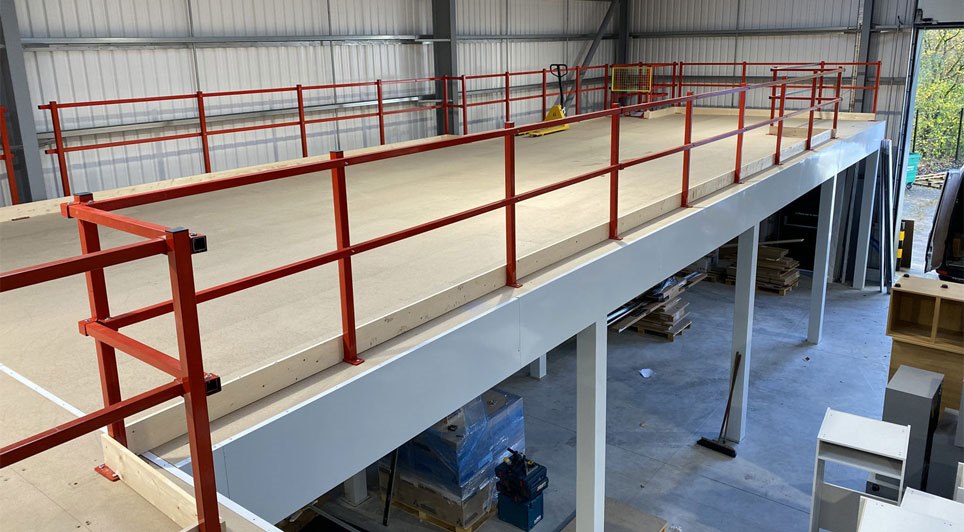
When businesses decide to invest in a mezzanine floor, one of the first questions they face is whether a free-standing or building-supported mezzanine is the best solution.
Both options can provide valuable additional floor space without the cost and disruption of relocating premises. However, they differ significantly in their design, structural requirements, flexibility, and long-term benefits.
At Doity Engineering, we help businesses across the UK identify the most suitable mezzanine solution for their operational needs. Understanding the differences between these two types of mezzanine is the first step towards making the right investment.
What Is a Free-Standing Mezzanine Floor?
A free-standing mezzanine floor is a self-supporting structure that relies entirely on its own columns and framework for support. It does not depend on the existing building structure to carry its load.
This makes free-standing mezzanines one of the most versatile and widely used solutions for warehouses, manufacturing facilities, distribution centres, and commercial premises.
Benefits of a Free-Standing Mezzanine
Flexibility
Because the structure is independent of the building, it can often be adapted, expanded, reconfigured, or even relocated if business requirements change.
Faster Installation
Free-standing systems generally require fewer modifications to the existing building, helping to simplify installation and minimise disruption.
Suitable for Leased Properties
Many businesses operating from leased premises prefer free-standing mezzanines because they can often be removed and reused if they relocate in the future.
Reduced Impact on Existing Structures
The building itself typically requires minimal structural alterations, making the process more straightforward and cost-effective.
Typical Applications
Free-standing mezzanine floors are commonly used for:
• Warehouse storage
• Picking and packing areas
• Manufacturing space
• Additional office accommodation
• Retail stockrooms
• E-commerce fulfilment centres
At Doity Engineering, our modular mezzanine systems are specifically designed to provide flexibility, making them ideal for businesses that anticipate future growth or operational changes.

What Is a Building-Supported Mezzanine Floor?
A building-supported mezzanine uses the existing building structure to support part or all of the floor system. This may involve connecting to structural steelwork, columns, walls, or other load-bearing elements within the building.
Because part of the load is transferred into the building itself, fewer supporting columns may be required beneath the mezzanine.
Benefits of a Building-Supported Mezzanine
Maximised Floor Space
With fewer support columns required, businesses can often achieve a more open layout beneath the mezzanine.
Ideal for Permanent Installations
Building-supported systems can be particularly effective when the mezzanine is intended to remain in place for the long term.
Integration With Existing Structures
In some facilities, integrating the mezzanine with the building can create a seamless extension of the available workspace.
Typical Applications
Building-supported mezzanines are often used in:
• Purpose-built industrial facilities
• Manufacturing plants
• Commercial buildings undergoing refurbishment
• Large-scale permanent expansions
Key Factors to Consider
Future Flexibility
If there is a possibility that your business may expand, relocate, or reconfigure operations in the future, a free-standing mezzanine often offers greater flexibility.
Businesses looking for a long-term, fixed solution within an owned property may find a building-supported system more appropriate.
Building Suitability
Not every building can support additional loads from a building-supported mezzanine.
A detailed structural assessment is required to determine whether the existing building framework can safely accommodate the additional weight.
At Doity Engineering, we carry out comprehensive structural evaluations before recommending any solution.
Operational Requirements
The way your business uses its space is a major factor in determining the best option.
Considerations include:
• Storage requirements
• Equipment and machinery locations
• Forklift movement
• Workflow efficiency
• Access requirements
• Future expansion plans
A mezzanine should improve operational efficiency, not create restrictions.
Cost Considerations
The most cost-effective option will depend on the specific building and project requirements.
While building-supported mezzanines may reduce the number of support columns required, they can also involve additional structural assessments and modifications to the existing building.
Free-standing systems often provide a simpler installation process and greater long-term adaptability.
Which Option Is Best?
There is no one-size-fits-all answer.
For many businesses, particularly those operating warehouses, distribution centres, or leased premises, a free-standing mezzanine provides the flexibility and future-proofing needed to support growth.
For businesses seeking a highly integrated, permanent solution within a suitable building, a building-supported mezzanine may offer advantages in terms of layout and space utilisation.
The key is choosing a solution that aligns with both your current operational requirements and your long-term business plans.
Why Work With Doity Engineering?
At Doity Engineering, we design, manufacture, and install bespoke mezzanine floors tailored to each client's specific needs.
Our team evaluates your building, operational requirements, growth plans, and compliance obligations before recommending the most effective solution. Whether that means a free-standing system, a building-supported mezzanine, or a hybrid approach, our focus is always on delivering safe, practical, and future-ready space solutions.
Final Thoughts
Both free-standing and building-supported mezzanine floors can deliver significant benefits when designed correctly. The right choice depends on your building, your operational requirements, and your plans for the future.
By understanding the strengths of each option and working with an experienced mezzanine specialist, businesses can maximise space, improve efficiency, and create room for long-term growth without the expense of relocating.