UK
UK Ireland
 Scotland
 London

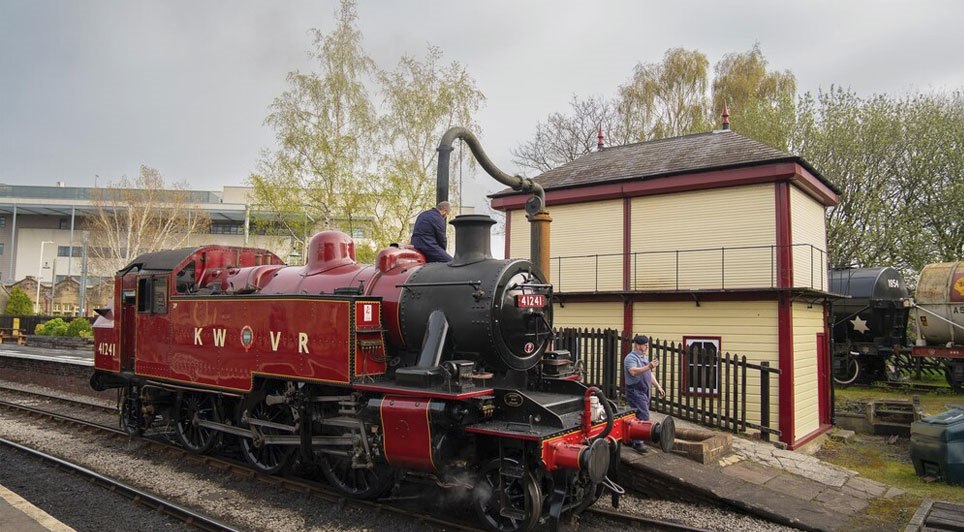
Infrastructure specialists DYWIDAG brought together customers, partners and industry colleagues at the historic Keighley & Worth Valley Railway for its "Track to the Future" event, demonstrating how smart monitoring and more relevant data are supporting the future of rail and civil infrastructure.
Hosted on a preserved steam railway, itself a symbol of Britain's engineering heritage, the event was a great juxtaposition of how cutting‑edge sensing technologies can protect Victorian‑era assets, that continue to carry modern traffic loads far beyond what their designers probably ever anticipated.
"Today was about innovation and collaboration to support critical assets," said Peter Assinder, Managing Director, DYWIDAG Limited. "By bringing our partners and customers together, we were able to show how smart monitoring systems can safeguard both new and aging infrastructure, while keeping people and networks moving."
The day centred on Smart Guard, DYWIDAG's integrated monitoring system. Powered by Worldsensing, it combines multiple sensing technologies into a single Information Intelligence platform to deliver comprehensive infrastructure insights. It enables rapid event detection, identifying and verifying tilt events in under five seconds in optimal conditions through wireless sensors and cameras, helping engineers to intervene early and reduce risk, downtime, site exposure, and ultimately, maintain a safe environment.

The system also detects earthwork movement, assesses subsurface conditions, and monitors structural integrity using advanced sensing technologies, while capturing high-precision geotechnical data via cloud-connected platforms. These capabilities are supported by seamless hardware and software integration, enabling near real-time alerts via text and email, enhanced with on-site camera imagery for improved situational awareness.
Demonstrations showed how these systems can be deployed without invasive, large‑scale regrading, reducing risk on unstable slopes and minimising disruption.
"Using low‑frequency connectivity means our sensors continue to perform in the very conditions that cause most failures – saturated soil and dense vegetation," explained Matt Azzopardi of Worldsensing. "That reliability is critical when you're monitoring earthworks on busy main lines or remote embankments."
Following morning briefings and stand visits, delegates travelled by steam train to a live test site, where they observed real-time monitoring in action, including tilt sensors tracking embankment movement, cameras providing instant visual context, and reporting.
Autonomous battery-powered systems supported by solar energy, with all data streamed back to DYWIDAG's Infrastructure Intelligence platform for live visualisation, analysis and reporting.
The blend of modern technology within a heritage setting highlighted the central theme of the day: applying advanced monitoring to safely extend the lifespan of ageing assets across rail, highways, energy, and broader civil infrastructure.
"By combining best-in-class sensing from our partners with our robust data platforms and practical field installation techniques, we can give asset owners a much clearer, earlier view of emerging risks," said Peter Assinder of DYWIDAG. "That's essential when you're managing earthworks and structures across the network."
"Events like Track to the Future show that with the right data and partnerships, we can manage that legacy safely and intelligently - not just on rail, but multiple civil and structural applications."