UK
UK Ireland
 Scotland
 London

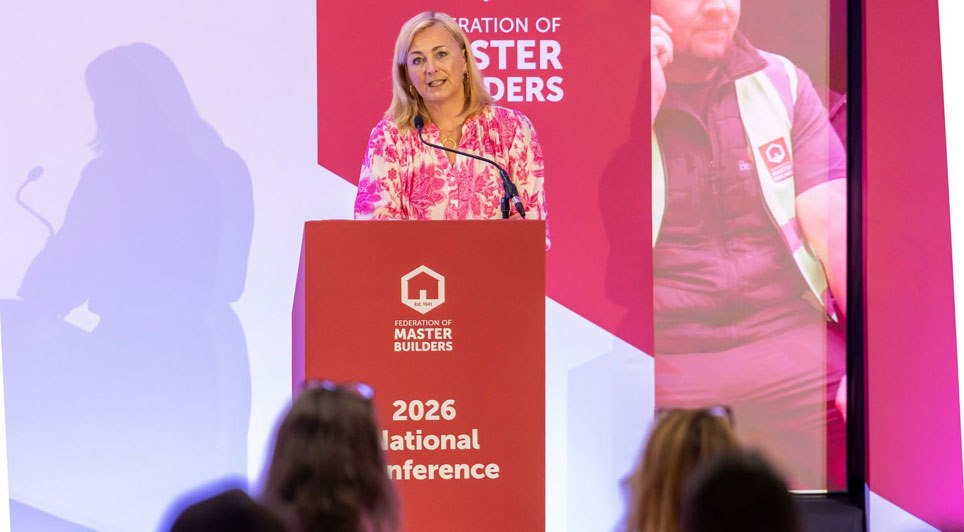
The Federation of Master Builders (FMB) is marking UK Women in Construction Week (2–8 March 2026) by highlighting the vital contributions of women across the building sector, from site-based apprentices to executive board members.
With women currently making up just 4% of the UK construction workforce, the FMB is urging small-to-medium building firms to actively improve workplace culture to make the industry more welcoming and visible to female professionals.
The call to action comes alongside optimistic statistics from the Office for National Statistics, which indicate the number of tradeswomen in the UK rose by 41% between 2006 and 2021. Furthermore, the period between 2019 and 2022 saw a 73% surge in women enrolling in construction and engineering apprenticeships.
Lauren Daniel, a Business Development Apprentice at London-based McLaughlin Decorating, shared her experience of choosing a vocational path over university: "I'm the first person in my family to go down a construction route; everyone else is either a doctor or lawyer—and I love that because it's something I'm passionate about. My advice to any girls who are nervous about coming into construction is: if you love what you do, then do it. Don't let anybody tell you that you can't, just because you're a woman."

The FMB's leadership emphasized that the sector must do more to attract talent from the entire population to address ongoing skills requirements.
Brian Berry, Chief Executive of the FMB, said: "Construction is one of the most skilled, rewarding and varied industries in the country and yet we're still not doing enough to make that case to half the population. We need women at every level in the sector from being on the tools, in the office, and at the boardroom table. Women in Construction Week is a moment to celebrate the incredible women already working in our sector but it's also a moment to ask: are we doing enough?"
Annie Summun, a National Board representative for the FMB who transitioned into the industry after a career in retail, highlighted that technical backgrounds are not the only route into the field. She noted: "The construction industry has shown me that the most valuable skills are transferable: listening, problem-solving, and understanding people. It's those very skills that allow me to serve our FMB members effectively and champion the sector of which I am proud to be a part."