UK
UK Ireland
 Scotland
 London

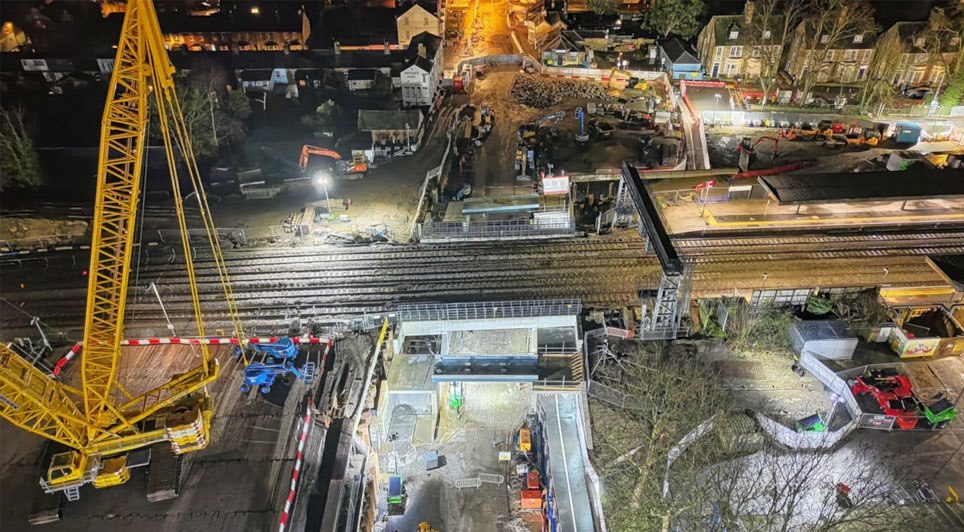
A major £7.9m infrastructure project at the southern approach to Manchester Piccadilly has successfully concluded, with the first trains now running on newly installed tracks.
Working in partnership with the Central Rail Systems Alliance, Network Rail engineers executed a high-intensity, nine-day programme to modernise six lines serving the North West's busiest rail hub.
The project involved the total overhaul of railway assets that were last replaced in the late 1980s. During the possession period, which ran from 14 to 22 February, site teams delivered a significant volume of structural and technical renewals, including:
• The installation of 11 sets of points.
• The replacement of 9km of signalling and telecommunications cabling.
• The exchange of 4,000 legacy timber sleepers for modern concrete equivalents.
• The laying of 5,500 tonnes of new ballast to stabilise the railway foundation.

• Comprehensive upgrades to signalling and lineside equipment.
While the main track shed was closed, additional maintenance was carried out within the station environment. This included the repointing and repainting of platform edges and the upgrading of emergency lighting systems across platforms 1 to 12.
Brian Paynter, Network Rail Capital Delivery track director, said: "We would like to say a big thank you to passengers for their patience while this once-in-a-generation upgrade has taken place over the last nine days.
"Manchester Piccadilly is one of the country's busiest stations and it's a key hub for people travelling to the North West. Upgrading the track over six lines in what's known as the Piccadilly corridor will make journeys more reliable and the points and signalling systems less prone to faults - meaning fewer delays for passengers. It's all part of our long-term commitment to invest millions of pounds to make the North West's railway fit for the future."
Simon Elliott, network director for rail at TfGM, added: "This was a once in a generation piece of work that will future-proof journeys for people travelling to and from Manchester Piccadilly train station for years to come.
"By working together with partners across the rail industry we were able to keep people moving and we would like to thank everyone for their patience while these works took place and all of our colleagues who helped people to make their journeys on Bee Network trams and buses."
The project forms part of a wider £400m investment programme scheduled for the West Coast Main Line over the coming year. Follow-up engineering works, including tamping to secure the new ballast, are scheduled for Sunday 1 March and Sunday 22 March.