UK
UK Ireland
 Scotland
 London

Floods are no longer rare. They are now among the most visible signs of climate change…. disrupting communities in Pakistan, paralysing towns across the UK, and devastating lives around the globe.
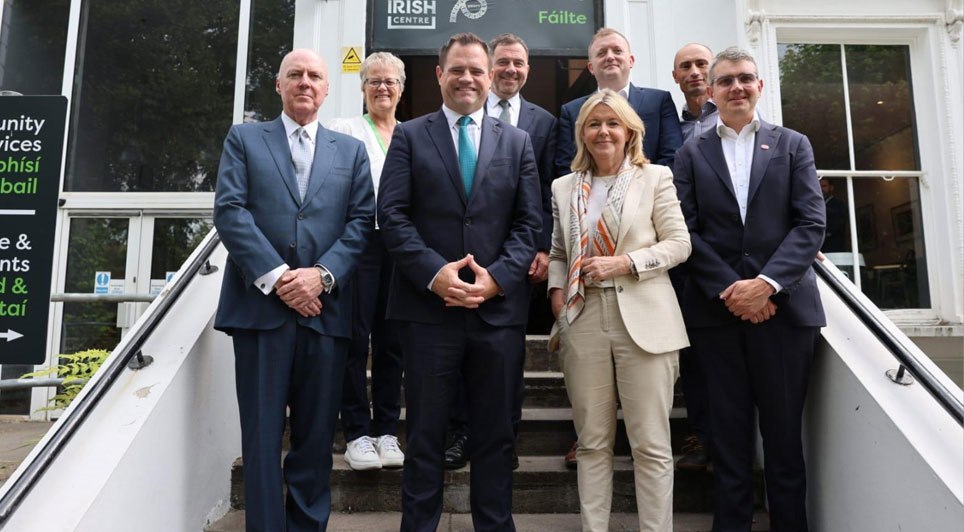
At the University of Birmingham Global Leaders Meeting at The Exchange, hosted by the Birmingham Institute for Sustainability and Climate Action (BISCA), this truth became clearer than ever:
➡ Climate recovery is not just a science issue. It's about people, policies, and partnerships.
🌊 Why floods are a global wake-up call
Floods don't respect borders. The water that sweeps through villages in South Asia or disrupts transport in Europe tells the same story: our systems are fragile. Without stronger climate policy frameworks, sustainable planning, and international collaboration, we will remain unprepared for the crises ahead.
This isn't just about recovering after floods. It's about asking:
How do we adapt before disaster strikes?
How do we build climate-resilient communities?
How do we share knowledge across nations, so no one fights this battle alone?
🎓 The role of universities in climate action
One powerful message from the UoB meeting was that universities are not only research institutions …. they are global connectors.

They translate research into policy frameworks governments can act on.
They create opportunities for cross-border collaboration.
They empower students, communities, and youth to lead in sustainability.
This bridge between research and policy is exactly what our future depends on.
🌱 Freshbreeze Environment Ltd.: From research to practice
At Freshbreeze Environment Ltd., we see the same principle at work every day. Our consultancy helps transform research and data into practical solutions through:
✅ Air Quality Assessments for planning and development.
✅ Indoor Air Quality Monitoring to protect public health.
✅ Odour and Dust Assessments for construction and industrial projects.
✅ Sustainability Planning Support for resilient infrastructure.
Floods and air pollution may seem like different challenges, but both require the same ingredients: collaboration, communication, and community engagement.
🌐 Crossing boundaries, breaking silos
The UoB event reminded me that climate change is not a problem any one country can solve. We need to collaborate across borders and boundaries, combining science, industry expertise, and community knowledge.
That means:
Sharing data and best practices across nations.
Ensuring policy uptake is measurable and impactful.
Making youth and community involvement central to climate solutions.
📣 A call to action
The full report from the event offers practical insights and policy recommendations. But reports alone are not enough.... they need to spark conversations, collaborations, and commitments.
So here's my challenge to you:
If you're in academia, share your knowledge beyond the classroom.
If you're in policy, work with researchers and communities to design practical solutions.
If you're in industry, embed sustainability into every project.
If you're a community member, hold leaders accountable and take small steps that add up to change.
🌍 Climate action will only succeed if it is collective.
Let's keep building bridges….. between research and policy, universities and industries, local voices and global agendas.
Together, we can move from dialogue to delivery, and from ideas to impact.
#FloodResilience #ClimatePolicy #Sustainability #AirQuality #COP30 #GlobalCollaboration #FreshbreezeEnvironment #ResearchToImpact