UK
UK Ireland
 Scotland
 London

With pay growth falling, employer costs rising, and a deepening labour crisis, the construction industry faces mounting pressure just as national delivery targets accelerate.
"You Can’t Build 1.5 Million Homes Without a Workforce"
Why rising costs, weak wage growth, and labour shortages could stall Labour’s biggest infrastructure pledge
Wage growth has slowed to its lowest level in years, with regular pay rising just 5.0% in the three months to May 2025, down from over 6% a year ago. On the surface, that might sound like relief for employers. But the reality is far more complex.
April brought a 6.7% rise in the National Living Wage, and employer National Insurance contributions increased to 15%. So even as pay growth softens, total labour costs are surging, leaving construction businesses under growing financial strain.
"Wages may appear to be stabilising, but businesses are absorbing more hidden costs than ever," said Catherine Storer, Executive Director at Essential Site Skills.
"The real pressure comes from what's happening behind the scenes, increased tax, rising liabilities, and a workforce that’s harder to retain and more expensive to grow."
These rising costs are already reshaping workforce strategies. According to the latest Labour Market Outlook, more than half of UK employers have scaled back hiring plans. In construction, industry groups report a marked rise in staffing reductions and delayed recruitment, with SMEs under the greatest pressure since 2020.

The timing couldn't be worse. With Labour’s plan to build 1.5 million homes in five years, and the CITB Construction Skills Network forecasting a need for 239,000 new recruits by 2029, the industry is expected to scale up rapidly. But if firms can’t afford to grow their teams, these national targets could quickly unravel.
Cost Crunch vs Construction Boom
Employers brace for Autumn Budget shocks as rising tax and wage bills collide with a deepening labour crisis
It's not just about rising costs now, it’s what’s coming next.
The Autumn Budget 2025 is expected to bring further challenges for businesses, with widespread concern over tax freezes, reduced reliefs, or new employer liabilities. A recent Institute of Directors survey found 80% of business leaders are already citing tax policy uncertainty as a key concern, with confidence at its lowest level since 2016.
Construction firms are already feeling the heat. In the first half of 2025, listed construction companies issued more profit warnings than at any point since the pandemic, with 46% blaming policy changes and tax pressures.
At the same time, the industry is battling one of its worst labour shortages in decades. Post-Brexit reductions in EU labour have caused a dramatic drop in site-ready workers, in London alone, the share of EU workers has fallen from 42% to just 8%. The overall sector is estimated to be short 251,000 workers by 2028.
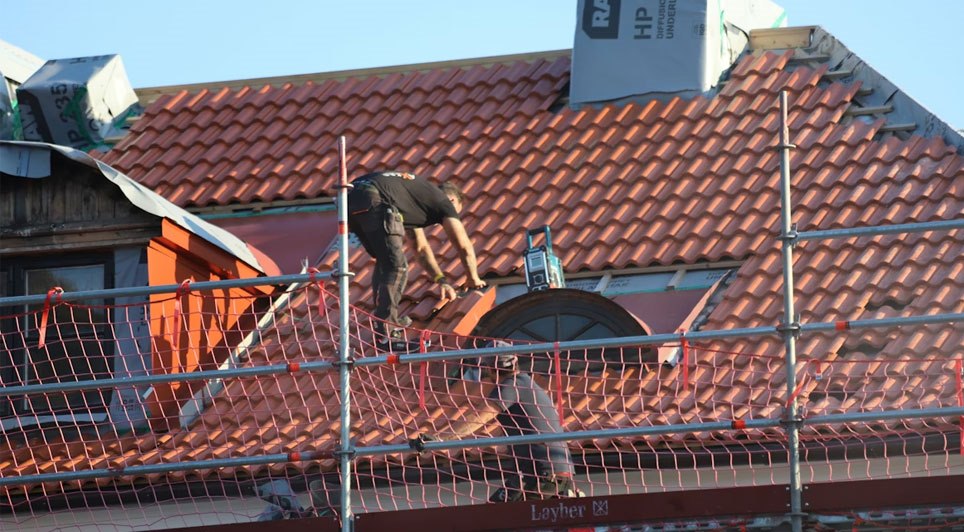
To fill the gap, some housebuilders are piloting robotic bricklayers capable of laying 500 bricks per shift, supervised by just one operator. While useful, experts caution that automation is only a stopgap.
"You can't automate your way out of a 250,000-worker shortfall," said Storer.
"Technology will help, but the solution lies in building a skilled, stable, and supported workforce, and that takes investment, planning, and government support."
What Construction Leaders Must Do Next
The pressures are real, but they’re not insurmountable. For construction businesses to survive the squeeze and still deliver on the UK’s ambitious build targets, proactive planning is no longer optional — it’s critical.
Now is the time to:
• Lock in staffing costs early through structured frameworks and long-term contracts
• Invest in your existing workforce, retention and upskilling cost far less than constant recruitment
• Adopt Modern Methods of Construction (MMC) to boost output and reduce reliance on hard-to-source labour
• Strengthen onboarding, career progression and workforce engagement to futureproof your teams
"This is more than a workforce issue, it's about delivery, growth and long-term resilience," said Catherine Storer, Executive Director at Essential Site Skills.
"If we invest in people now, we won't just keep projects moving, we’ll build a stronger, more sustainable future for the industry."