UK
UK Ireland
 Scotland
 London

Construction work has started at the site of HS2's first innovative 'green tunnel', designed to blend the high speed railway into the landscape and reduce disruption for communities.
Unlike a normal underground tunnel, the one-and-a-half mile (2.5km) Chipping Warden green tunnel in Northamptonshire is being built on the surface using a pioneering off-site manufacturing approach to speed up construction and improve efficiency.
This approach will see more than five thousand giant concrete tunnel segments made in a factory in Derbyshire before being assembled on site. The completed tunnel will then be covered by earth, with trees, shrubs and hedgerows planted to fit in with the surrounding countryside.
Chipping Warden is one of five 'green tunnels' that are being built on phase one of the HS2 project, which is designed to improve links between London, Birmingham and the north, help level-up the economy and provide a low carbon alternative to car and air travel.

Applying lessons from the construction of the latest French high speed lines, the off-site approach was developed by HS2’s main works contractor, EKFB - a team made up of Eiffage, Kier, Ferrovial Construction and BAM Nuttall. The tunnel segments are being made by Stanton Precast in Ilkeston Derbyshire as part of a contract which is set to create up to 100 local jobs.
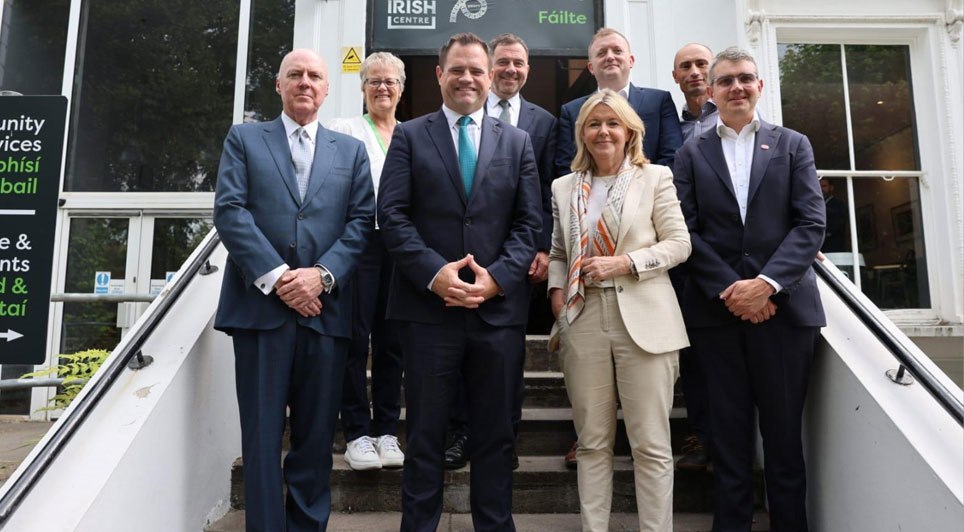
HS2 Ltd's Project Client Rohan Perin, said: "The Chipping Warden green tunnel is a great example of what we're doing to reduce disruption for people living close to the railway - and it’s fantastic to see the first arches in position.
"Our trains will be powered by zero carbon electricity but it’s also important to reduce the amount of carbon embedded in construction. The off-site manufacturing techniques being used will help cutting the overall amount of carbon-intensive concrete and steel in the tunnel and make the whole process faster, more efficient and therefore less disruptive for the community."
Designed as an m-shaped double arch, the tunnel will have separate halves for southbound and northbound trains – each one the height of two double-decker buses. Instead of casting the whole tunnel on site, five different concrete precast segments will be slotted together to achieve the double arch - one central pier, two side walls and two roof slabs. All 5,020 segments will be steel reinforced, with the largest weighing up to 43 tonnes.
Concrete and steel are some of the biggest sources of carbon emissions within the construction industry and by reducing the amount of both materials needed for the tunnel, this lighter-weight modular approach is expected to more than halve the amount of carbon embedded in the structure. It also requires less people and equipment on site, improving safety and reducing disruption for residents.