UK
UK Ireland
 Scotland
 London

Midlands contractor G F Tomlinson has completed major improvement works as part of the £30 million transformation of Nottingham Castle.
Specialist restoration works and a new visitors centre has now been handed over by firm.
Funded by the National Lottery through the National Lottery Heritage Fund (NLHF), D2N2, Nottingham Castle Trust and Nottingham City Council, the works involved an extension to the Ducal Palace, significant mechanical and electrical works, specialist restoration, improved access to the underground cave network and the construction of the new visitors centre.
The completion of the construction phase of the overall transformation, is a significant landmark and keeps the project on track for the castle to re-open early next year.
The improved destination is expected to attract more than 400,000 visitors a year, celebrating the last 1,000 years of Nottingham’s heritage.
Preservation of the site was paramount throughout the project, and one of the key and most complex elements of the build was work to the Grade I listed Ducal Palace, which will house the new Robin Hood and Rebellion galleries, telling stories of the city’s legendary outlaw.
Working closely with Historic England, stonework and lime plaster restoration was undertaken to bring the building back to its former glory. A particular focus of the sensitive restoration was ensuring repairs remained in line with the heritage of the original building.

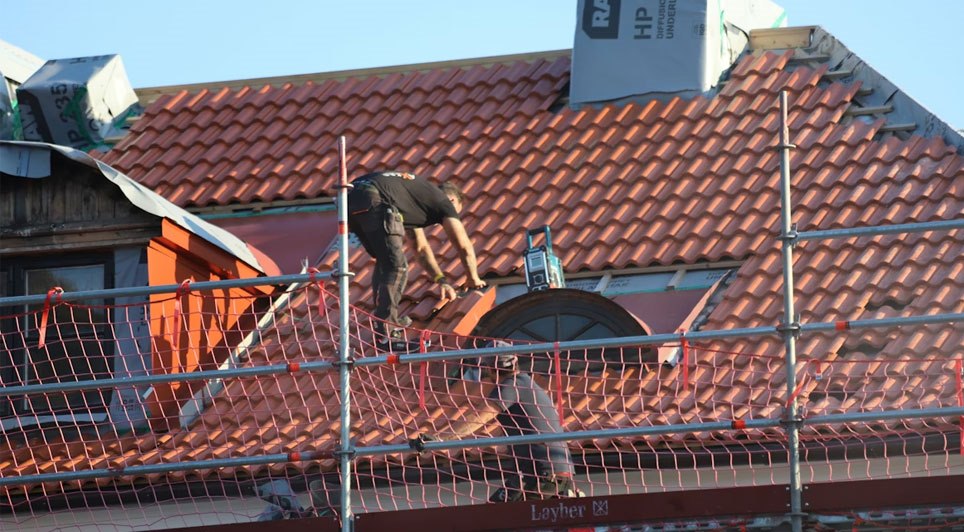
Externally the Ducal Palace, which dates back to the 1660s, with the museum opening in the 1870s, now benefits from extensive roof repairs including the refurbishment of roof tiles and the addition of new slate, roof lights and lead gutters.
The scaffolding and temporary roof required to safely carry out the restoration works was designed to be free standing, with the structure ballasted with water butts, ensuring the scaffolding didn’t touch the building preventing damage to the masonry.
New to the site is the contemporary visitors centre, which will house the ticketing office and café with an outdoor seating area. This was constructed using a steel frame and timber core insulated walls, with the external oak cladding chosen due to its association with Robin Hood and Sherwood Forest.
For future tours, access to the caves within the castle rock has also been improved with new handrails and lighting for increased safety and accessibility.
The history and heritage of the site, which dates back to Norman times, meant any excavations had to be carefully considered. Extensive surveys were carried out to ensure areas of archaeological interest were identified, and the unique archaeology of the site was preserved, recorded and protected.
Whilst on site, G F Tomlinson recycled 97% of its construction waste, contributing positively to the local environment and the climate change agenda. The contractor also provided many opportunities for local people including 27,000 hours of employment, training and social value initiatives.
Further opportunities included local school and college site tours, graduate work experience placements, apprenticeships and employment opportunities, alongside support for local charity Framework - which focuses on housing, health, employment, support and care for people across the Midlands.
Nottingham Castle is set to open to the public in early 2021, once all internal fit-out works including state of the art digital installations in the Robin Hood and Rebellion Galleries, and landscaping of the grounds including a new play area are complete.