UK
UK Ireland
 Scotland
 London

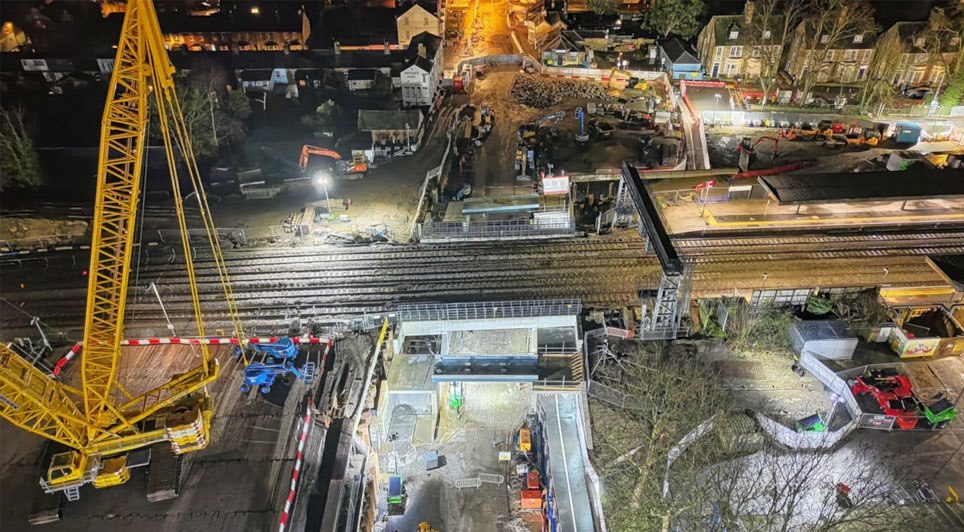
Five framework contracts worth billions of pounds are set to deliver a host of signalling improvements on Britain's railways.
These contracts will improve asset reliability and in turn reduce delays for the users of the railway – passengers and freight operators, while also increasing capacity on the network.
They are worth an estimated £2.4bn over Control Period 6 (2019-2024), and up to £3.6bn including options to extend for the first two years of Control Period 7 (2024-2026).
Paul Wright, Network Rail's commercial director, said: "The major signalling frameworks are the final awards in a three-tier approach to signalling delivery for Control Period 6. The awards have gone to suppliers that, between them, have many years of signalling experience and will help Network Rail facilitate key signalling renewals safely and efficiently. We look forward to working with the successful suppliers to deliver signalling projects that are truly on the side of passengers and freight users."

Alstom has secured the contracts for the Southern Region and Eastern region, while Siemens Mobility Ltd will deliver on the Scotland Region and North West & Central region. A joint venture between Hitachi Rail STS UK Ltd and Linbrooke Services Ltd won the contract for the Wales & Western region.
Nick Crossfield, Managing Director, Alstom UK & Ireland, said: "Signalling is the backbone of a safe, reliable and high performance rail network for passengers. Alstom are proud to have been trusted by Network Rail to deliver these planned improvements in their two biggest regions over the next four years. We will be increasing the use of digital technology and automation, reducing cost and increasing reliability, and building on successful projects such as the Bristol Area Signalling Renewals and Enhancements Alstom delivered in the Western region last year. Inclusivity and diversity are at the heart of our plan, and we look forward to creating hundreds of new highly skilled jobs and up to 270 apprenticeships as we do so."
These frameworks form part of a much wider new approach to commerciality for Network Rail, as it becomes more focused on securing better deals with the supply chain to deliver a better-value railway for passengers. The company's ambition is to become easier to work with and a more efficient and dependable partner, while breaking down barriers to make it easier for other organisations to invest in and build on the railway. Through a comprehensive efficiency portfolio encompassing over 1,000 initiatives, Network Rail will save £3.5bn over CP6.
The frameworks went live on 31 January 2020.
(CM/MH)