UK
UK Ireland
 Scotland
 London

Industry bosses will be taking "nothing for granted" despite construction workloads continuing to rise three months after Brexit, according to the Federation of Master Builders (FMB).
In its latest State of Trade Survey, the organisation said ongoing workloads for construction SMEs had remained "remarkably resilient".
In Q3 2016, the net balance for overall workloads remained in positive territory for the 14th successive quarter, despite falling by 6% to +18. A third of firms reported higher workloads, down from 37%, while marginally more businesses stated lower workloads (14% vs. 13%) compared with the previous quarter.
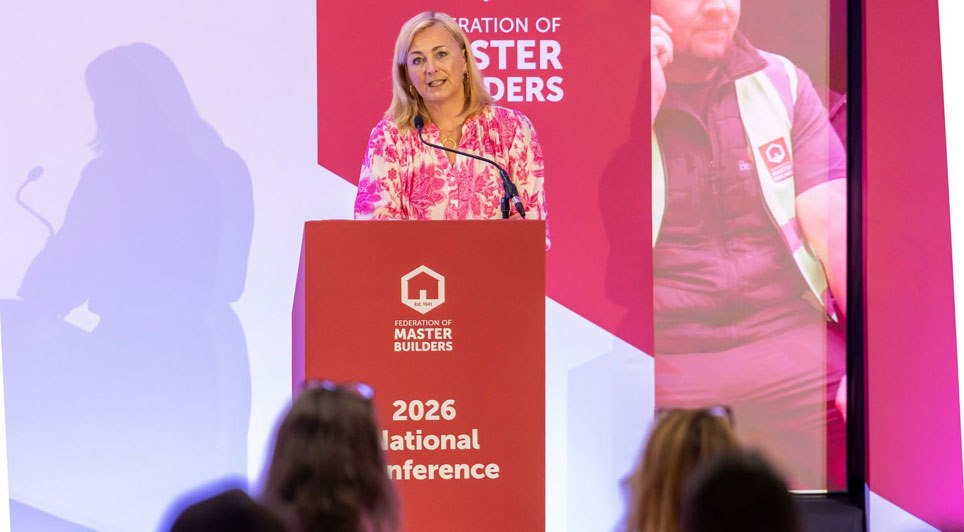
FMB Chief Executive, Brian Berry, said growth had softened compared to the "buoyant" first half of the year.
"Some of the other key indicators of SME activity, such as employment levels, anticipated workloads and new work enquiries, are all positive, albeit showing slowed growth compared to the previous quarter," he said.

"If we all agree that construction is a "weather vane" industry, and demand for home improvement and new build homes an important gauge of consumer confidence, then our results chime with the cautious positivity demonstrated across construction and the wider housing market.
However, Mr Berry added the FMB feels the construction skills shortage is starting to have an impact on some regions in the UK.
"Growth has softened compared to the buoyant first half of the year and some parts of the UK have gone into decline. In particular, London is flat-lining which is concerning given that it is typically one of the strongest markets for construction SMEs. Our feeling is that the construction skills shortage, which we know is particularly pronounced in London and the south east, is starting to bite.
"Our latest figures show that nearly two-thirds of SMEs are struggling to hire bricklayers and 55% are having a hard time sourcing carpenters and joiners. This highlights a different potential consequence of Brexit – the possibility that we will have a less flexible workforce. 12% of construction workers working in the UK are of non-UK origin, forming a vital part of a labour force that is already stretched. Given that the skills gap is only expected to grow over the next decade, it's vital that talented tradespeople continue to come to the UK."
(LM/MH)