UK
UK Ireland
 Scotland
 London

The National Federation of Builders (NFB) has welcomed the government's continued commitment to ensuring wider competition for public work.
The Better Procurement 2012 conference, co-sponsored by the NFB, was a one-year progress review that examined what had changed since the government voiced its aspiration to award 25% of government work to SMEs by the end of this parliamentary session in 2015.
The day started with a breakfast meeting hosted by the prime minister where key industry and government decision makers discussed how to remove barriers to competition and encourage a culture of innovation. The NFB has long campaigned for many of the initiatives that are now being rolled out.
The NFB has always said it does not want special treatment for its members nor for others frozen out of public work, only an equal opportunity to compete. This is being addressed, in part, through the Contracts Finder database which makes it easier to discover upcoming work.

The cost of bidding for work is a significant barrier, so the removal of pre-qualification questionnaires (PQQs) for bids for work below £100,000 will only widen the pool of companies from which the government attract bidders. The NFB's 2009 procurement survey found that 22% of respondents spent over four weeks each year filling out PQQs and 4% of respondents spent over £30,000 each year on the tender process. The NFB's 2012 procurement survey is in the field and will report in autumn 2012.
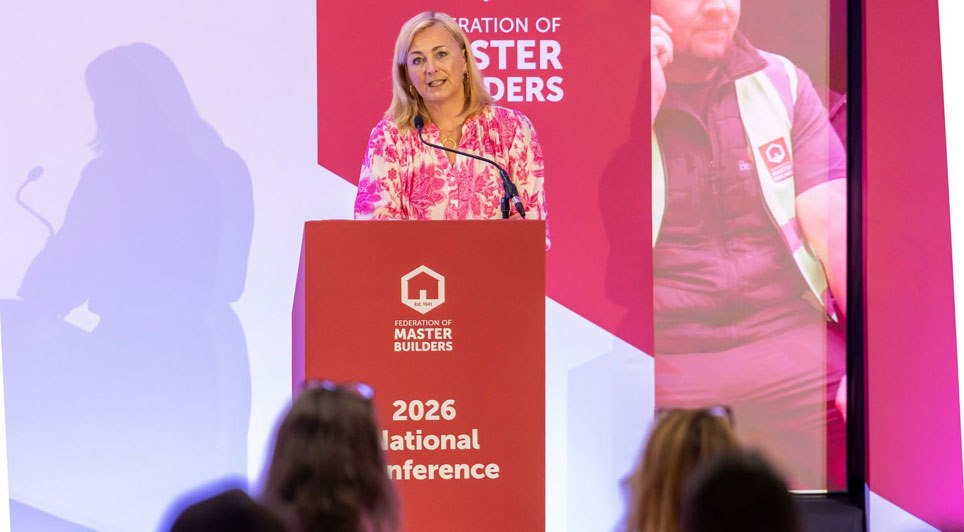
Julia Evans, chief executive of the National Federation of Builders, said: "Small and medium sized businesses cover a large range of companies and they are not restricted to the image that may come to mind of family-run enterprises or a man and a van. Many of these have built themselves into formidable enterprises turning over many millions of pounds, yet are still hampered when trying to win work. The government's promotion of the standard pre-qualification form for construction, PAS 91, and the core PQQ for other industries is welcome as there is still much scope for removing the costs of procurement from the process rather than cutting projects themselves."
(CD/GK)