UK
UK Ireland
 Scotland
 London

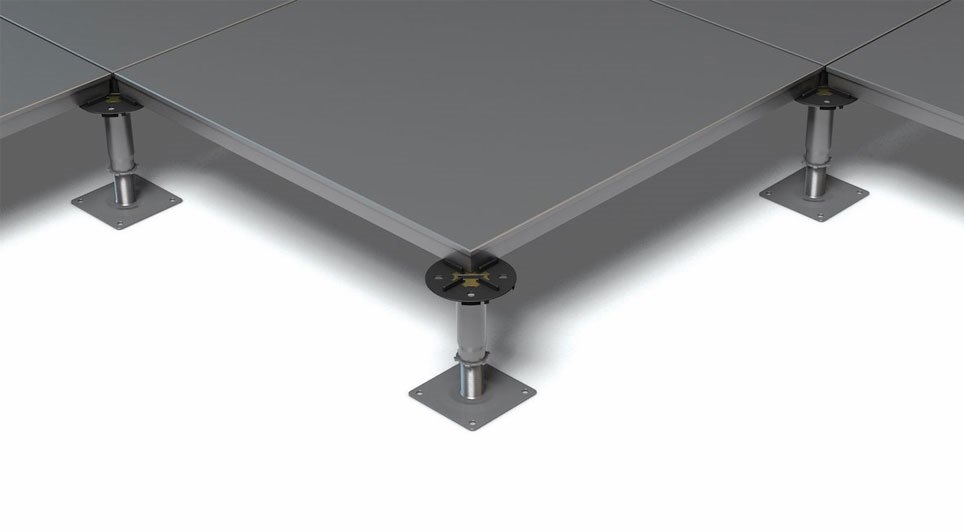
Szerelmey has launched a top-quality raised flooring system which can offer the visual appearance of a hard-finish monolithic floor while still providing the advantages of a raised floor. And it does this while eliminating the need for wet trades on the site, so enhancing speed and quality.
The system uses a calcium sulphate board which contains a high proportion of recycled material and offers good acoustic properties and excellent durability. The key to the quality finish is the use of large format calcium sulphate boards, which are routed to have matching tongue and groove profiles. Stone or other hard floor finishes are then pressure applied to these off-site.
The boards interlock on installation giving a monolithic structure but the design incorporates a joint between the stone tile finish for in situ grouting to leave the stone floor looking completely hand laid unlike when stone is fixed into individual raised floor trays. The difference in visual quality is comparable to the difference between carpet tiles and broadloom carpet.

By incorporating access points it is possible to make the floor accessible to underfloor services making it popular in environments such as reception areas, foyers, atria and lift lobbies – exactly the kind of areas where a high-quality stone floor may be desirable.
The calcium sulphate boards can also be recessed out for heating pipes allowing under floor heating to be fully incorporated within the system.
Mark Walden, Design Manager of Szerelmey explained: "What is so special here is that the floors meet the visual expectations given by traditional flooring methods of laying hard finishes on a solid substrate but without the programme constraints of using wet trades and more traditional methods of construction. On site logistical problems are minimised by prefabricating as much of the building components as possible off site, meaning a much speedier installation once it is delivered to the project."
The system is currently being used in the new BBC building in Portland Place and modified for Stanhope’s New Court Development in London, EC2.