UK
UK Ireland
 Scotland
 London

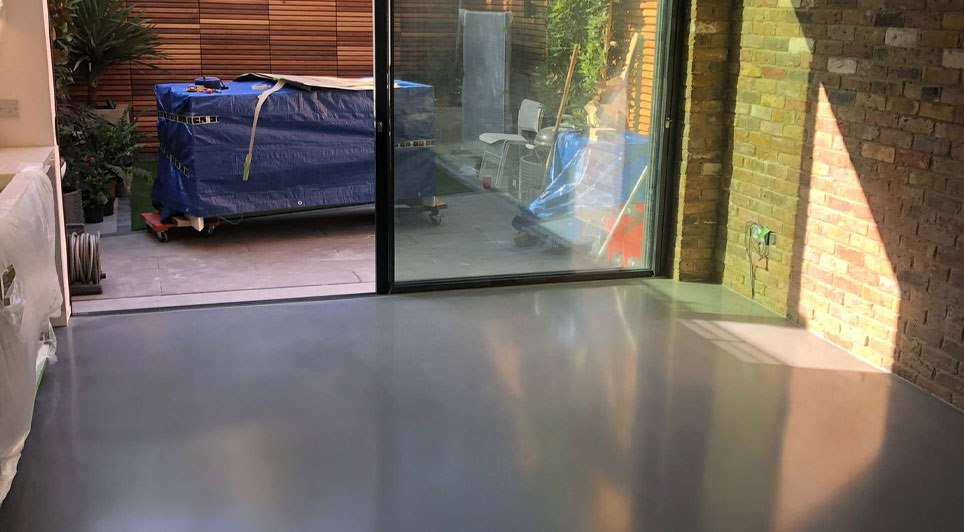
If you're searching for a concrete polisher, you're not just looking for a machine — you're looking for a complete system that delivers consistent, high-quality results.
This guide focuses on proven setups using:
•
This is what works on real jobs — not theory.
The Core Machines: What You Should Be Using
HTC 420 (110V) — Entry-Level Workhorse
The
HTC 420 110V is ideal for:
• Smaller commercial jobs
• Residential polishing
• Sites limited to 110V power
It's a solid starting point, but you need to be realistic — productivity is lower, and heavy cuts will take time.
Husqvarna T6 — The Step-Up Machine
The
Husqvarna T6 is where things start getting efficient:
• More weight and head pressure
• Better consistency across the floor
• Handles deeper grinding, certainly better than 110V machines
If you're doing polished concrete regularly, this is the minimum level you want to be at.
Husqvarna X8 — High Production
The Husqvarna X8 is built for:
• Large commercial floors
• Maximum output
• Reduced operator fatigue (remote operation)
This is about production polishing, not just getting the job done.
Tooling Setup: Where Floors Are Won or Lost
Your tooling sequence determines your finish — not the machine.
Metal Bond (Cutting Stage)

• Vari-Grind EZ M25 → Initial cut
• Vari-Grind EZ M50 → Refinement
These give a consistent scratch pattern and solid cut across most UK slabs.
Transitional Stage
This is where most people go wrong.
Transitionals:
• Remove metal scratches properly
• Reduce resin wear
• Improve clarity later in the process
Skip this stage, and it will show in the finish.
Resin Polishing Stage
• Fenix Polishing Pads (100 → 3000 grit)
Fenix pads are:
• Consistent
• Easy to read
• Strong lifespan
This is where you build your final clarity and gloss.
Grouting: Closing the Surface Properly
Before densifying, you need to deal with pinholes.
Why it matters:
• Fills micro-voids
• Improves reflectivity
• Creates a tighter, more uniform surface
Skipping grout = patchy finish later on.
Densifiers & Sealers: The Chemistry That Finishes the Floor
Densifier
• C2 Hard
This:
• Increases surface hardness
• Improves abrasion resistance
• Enhances polish clarity
Even on overlays or tighter slabs, it adds consistency.
Sealer System
This combination gives:
• Deep penetration (Protector)
• Surface protection + stain resistance (UltraSeal)
• Breathable finish (no peeling issues)
This is the difference between a floor that looks good… and one that lasts.
Example Concrete Polishing System (Proven Setup)
Here's a real-world sequence using this exact system:
1. Cut → Vari M25
2. Refine → Vari M50
3. Grout → GM3000
4. Refine → Repeat 50/100 if required
5. Transitional → Boride
6. Densify → C2 Hard
7. Polish → Fenix 100 → 200 → 400 → 800 → 1500 → 3000
8. Seal → C2 Protector + UltraSeal
This delivers:
• Consistent scratch removal
• High clarity
• Strong durability
Why This System Works
Most issues in polished concrete come from:
• Poor tooling progression
• Skipping stages
• Wrong chemical timing
This setup avoids all of that.
It's built around:
• Correct cut → refinement → polish flow
• Chemistry applied at the right stage
• Tooling that complements each step
Final Thoughts
If you're serious about polished concrete, stop thinking in terms of just a "concrete polisher."
Think in terms of:
• Machine
• Tooling
• Chemistry
• Process
Get all four right — and your floors will stand out immediately.
Need the Full Setup?
At SmartFloor UK & Multi-Hire, we:
• Supply all machines, tooling, and chemicals listed above
• Offer hire or purchase options
• Provide on-site setup and technical guidance
If you want to run this exact system on your next job, we'll help you get it right first time.
FAQs
What size concrete polisher do I need?
For most jobs, a mid-size planetary grinder is ideal. Larger machines are only justified on big commercial floors.
Can you polish concrete with a 110V machine?
Yes. However, expect slower progress, especially on harder concrete.
Do I need to densify concrete before polishing?
In most cases, yes — it improves hardness, clarity, and long-term durability.
What grit gives a polished finish?
Typically 800–3000 grit depending on the level of gloss required.