UK
UK Ireland
 Scotland
 London

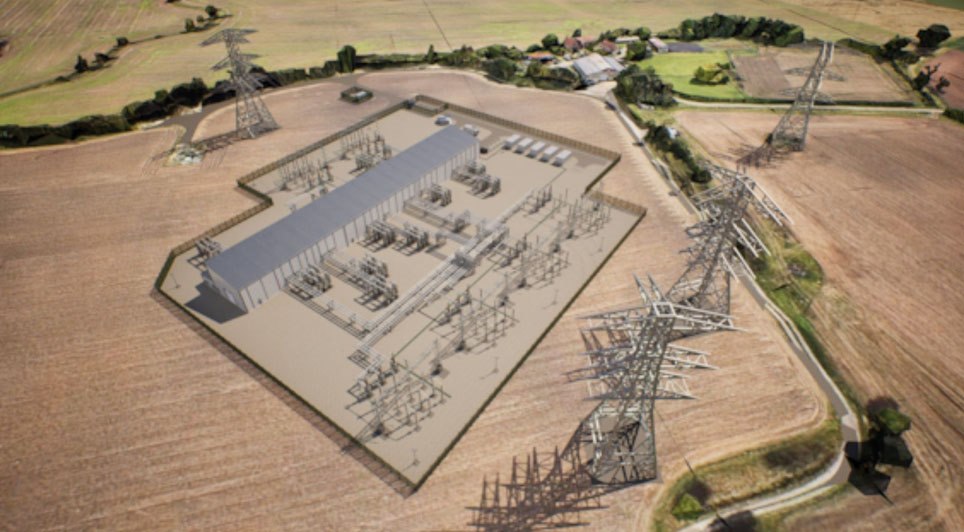
National Grid has achieved a significant milestone in the Humber region after securing planning consent from East Riding of Yorkshire Council for the new Birkhill Wood substation.
The new facility will allow National Grid to integrate 4.22GW of domestic energy into the network from three new North Sea wind farms, producing enough electricity to power more than 4 million homes. Located 700 metres north of the existing Creyke Beck substation, Birkhill Wood forms part of a major grid investment program in the North East designed to expand network capacity, boost resilience, and accommodate the expansion of renewable energy.
Over the next five years, £8.6 billion is scheduled to be invested across the Yorkshire and North East network as part of National Grid's broader UK-wide infrastructure modernisation strategy.
The Birkhill Wood development will connect RWE and Masdar's Dogger Bank South East and Dogger Bank South West wind farms, alongside SSE Renewables and Equinor's Dogger Bank D, which represents the proposed fourth phase of the world's largest wind farm. National Grid is already making steady progress on the initial three phases; SSE Renewables, Equinor, and Vårgrønn's Dogger Bank A was completed in Spring 2023, followed by Dogger Bank B in 2024 (both of which connect at Creyke Beck), while Dogger Bank C is scheduled to connect to Lackenby in Summer 2026.
To support the new infrastructure, the development includes the building of a new 2km access road off the A1079 to ensure safer access during construction and future operations, helping to mitigate the impact on local residents. Construction of this access road is now underway, with work on the substation itself projected to commence in spring 2027.

The substation will feature modern gas insulation technology, giving it a more compact layout and smaller footprint than traditional open-air substations. The design has been guided by thorough technical and environmental appraisals, as well as community feedback gathered during a public consultation in autumn 2024. This input resulted in landscaping enhancements to improve visual screening, helping the infrastructure blend into the surrounding rural landscape.
A secondary phase of development in the area will involve expanding the Creyke Beck substation through a project called Wanlass Beck. This expansion will accommodate an additional 3.2GW of domestic energy from battery energy storage systems and further offshore wind installations.
The proposals also carry a commitment to deliver a minimum 10% Biodiversity Net Gain. This target will be met by safeguarding existing trees and landscaping around the site boundary, upgrading on-site habitats where possible, and investing in external local biodiversity projects if required.
Furthermore, Birkhill Wood substation will serve as the northern connection point for the North Humber to High Marnham overhead line project, a major new transmission link that forms part of The Great Grid Upgrade. The overhead line scheme will enhance network capacity, improve resilience, and support green energy growth to transport secure, clean, and affordable power to where it is required.
Benefits for local communities
National Grid maintains that regions hosting new electrical infrastructure should see direct benefits. Once construction begins on the Birkhill Wood substation, funding grants will become available to support the local community and surrounding area, with National Grid inviting residents to share views on how the funds should be allocated.
Across the wider North East, National Grid is also establishing partnerships and investing in skills, employment opportunities, and local supply chains to secure a positive socio-economic legacy alongside improved grid infrastructure.
Daniel Cohen, Senior Project Manager at National Grid, said: "The substation is needed to connect offshore wind farms to meet growing electricity demand and will help ensure communities across the North East have a resilient and reliable power supply as everyday life becomes increasingly electrified.
"Strengthening the network is essential to support local businesses, future jobs and the connection of more secure, cleaner, home-grown energy from more affordable sources.
"We also want host communities to see clear benefits, including community funding for local projects, skills, jobs, and environmental improvements."