UK
UK Ireland
 Scotland
 London

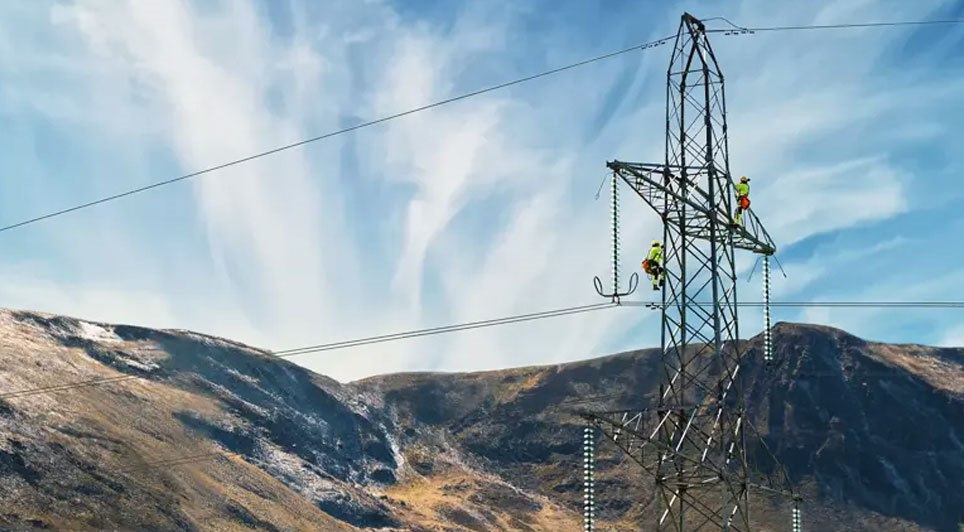
An event hosted at National Grid's Eakring training facility has demonstrated the potential to reintroduce high-voltage live line working to the UK for the first time in 25 years.
The gathering focused on the DEsign for Live Line Technology Acceleration (DELLTA) project. This initiative explores and develops reliable methods to execute maintenance and repairs on high-voltage transmission networks while they remain fully energised. The project looks at applying these techniques to existing infrastructure, as well as integrating live working requirements into the design and planning phases of future assets. While working on live high-voltage equipment is standard practice in several countries, it has not been utilised in the UK for a generation.
National Grid Electricity Transmission is leading the DELLTA project in partnership with Frazer-Nash Consultancy and The University of Manchester. The event celebrated the conclusion of the project's Alpha phase, which received £458,121 in funding from Ofgem's Strategic Innovation Fund (SIF) in partnership with Innovate UK. The fund targets ambitious projects that accelerate the decarbonisation of UK energy networks.
More than 40 energy industry professionals attended the showcase, which featured a demonstration of a suspension insulator replacement to display the tools, equipment, techniques, and safety protocols established during the Alpha phase. To ensure a clear walkthrough of the systems within a controlled environment, the exercise was performed on a dead overhead line tower. The demonstration featured overhead line workers using advanced equipment, including insulated rope systems and tailored lifting solutions designed to support future operational deployment.

Attendees discussed how network maintenance is currently heavily reliant on planned outages. Because shutting off the power can be expensive and logistically difficult to schedule, live working presents an opportunity to boost asset health and network resilience while mitigating constraint costs.
Participants were also briefed on the proposed three-year Beta phase of the project. If funded, this next stage will involve further refinement of working methods, live testing, training program formulation, and feasibility studies to help integrate the practice into everyday business operations.
The DELLTA project sits alongside other National Grid innovation initiatives, including the deployment of Dynamic Line Rating (DLR) technology to expand power line capacity and the modernisation of overhead line inspections via drones.
Prem Ranjan, Senior Innovation Engineer at National Grid, said: "The event was a fantastic opportunity to demonstrate what we have achieved during the Alpha phase of the DELLTA project to industry stakeholders.
"The need to maintain transmission capacity is more critical than ever, but an outage can be challenging to schedule and costly.
"DELLTA is tackling this challenge head-on by exploring live working techniques for high voltage assets, both existing and those being built in the future, which could enable maintenance without taking circuits offline.
"Using innovative equipment and techniques, alongside the highest safety standards, live working could help to reduce circuit curtailment, improve network resilience and support the rapid pace of grid reinforcement.
"We now look forward to progressing the project further as we look towards the proposed Beta stage."
Chris Land, Overhead Line Access and Technology Engineer at National Grid, added: "As our organisational culture has evolved, reintroducing live working presents new challenges. By clearly demonstrating what we've achieved so far, we can evidence its safety, build stakeholder confidence, and embed live working as a business-as-usual practice."
Steven Fletcher, of Frazer-Nash Consultancy, said: "It's been really encouraging to see the DELLTA Demonstration trial at Eakring and to witness, first-hand, what we've been discussing now being put into practice. Seeing the team operate in a real-world setting brings the concept to life and reinforces just how achievable this is at a wider scale. It's exciting to be part of a project with such clear potential, and one that could have a truly significant impact on how network maintenance is delivered in the future."
Vidyadhar Peesapati, of The University of Manchester, said: "At a time when the electricity network is undergoing its most extensive transformation to accommodate decarbonisation and increased electrification, reliance on outages presents a growing challenge. The knowledge and capabilities developed through this project will support more efficient and timely infrastructure upgrades, contributing to the achievement of net-zero targets while maintaining the high levels of resilience and reliability required during this period of rapid system transformation."