UK
UK Ireland
 Scotland
 London

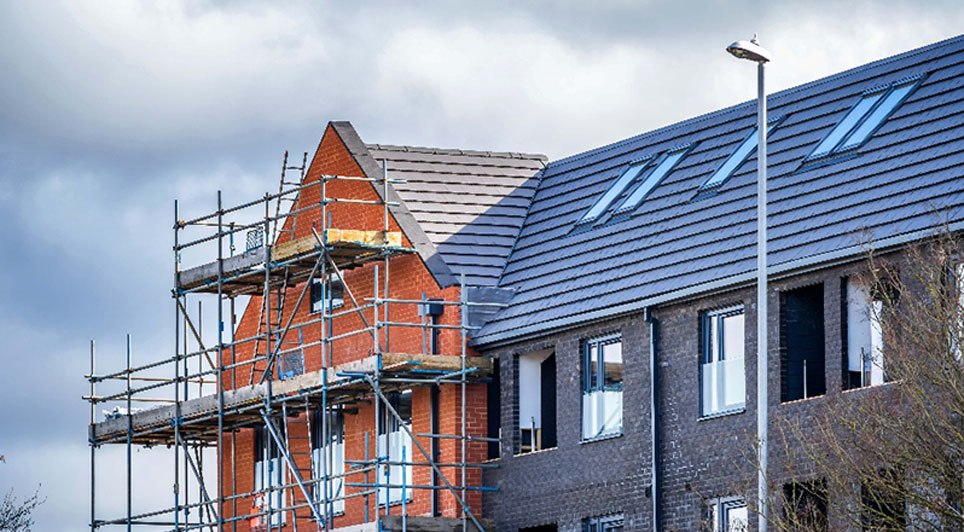
The Future Homes Standard (FHS) officially came into force on 24 March 2026 and represents the biggest change to Building Regulations since 2013. Designed to deliver homes that are ‘zero-carbon ready’, the new requirements are expected to reduce operational carbon emissions by 75-80% compared to previous standards. Ellen Huelin, Sustainability Director at Whitecode Consulting highlights the key changes that developers must be aware of to stay ahead of the curve.
While the headline changes, such as the end of gas boilers and the introduction of mandatory solar PV, have received significant attention, the reality is that the Future Homes Standard will affect almost every aspect of residential design and construction.
With Whitecode Consulting having recently delivered a series of presentations on the new regulations to developers and contractors across the UK, one thing has become clear: there is considerable interest in understanding what the changes mean in practice and what organisations should be doing now to prepare.
Phased developments will require careful planning
One of the most significant changes introduced through the Future Homes Standard is the way transitional arrangements will operate.
Historically, many developers have been able to secure approvals for a scheme and continue building subsequent phases under the same set of regulations for several years. Following on from the transitional arrangements introduced in 2021, this will no longer be possible.
For non-high-rise residential buildings, projects will have until March 2027 to submit applications under the current regulations. However, any plots that have not commenced before March 2028 will need to comply with the Future Homes Standard. For high-risk buildings, different dates apply, with transitional arrangements extending until September 2028.
This means developers with large phased developments need to understand now which plots may fall under the new regulations and which may remain under previous standards. Construction programmes, site sequencing and delivery strategies will all need to be reviewed to avoid unexpected redesigns and compliance issues further down the line.
Solar PV is no longer optional
Perhaps one of the most talked about aspects of the Future Homes Standard is the new requirement for solar photovoltaic panels. The Government confirmed in 2025 that new homes would be expected to include solar PV as part of a new functional requirement within Part L. While there are some exemptions, the expectation is that the vast majority of residential developments will need to incorporate solar PV.

What is particularly interesting is that compliance is no longer focused solely on the size of the PV system being installed. Instead, there is much greater emphasis on the actual energy output achieved.
Factors such as roof orientation, roof pitch, shading and available roof space will all influence compliance calculations. In practice, this means two developments with the same installed capacity could perform very differently from a regulatory perspective.
We are also seeing requirements increase significantly compared to previous notional building specifications, with many schemes requiring around 45% more PV generation than before.
Heat pump performance matters more than ever
The removal of gas boilers from new homes is one of the headline changes under the Future Homes Standard, but simply installing an air source heat pump will not automatically guarantee compliance.
As the industry moves away from using gas boilers as the benchmark for performance, the efficiency of heating systems becomes increasingly important. Developers will need to pay closer attention to system selection, seasonal performance, distribution losses and overall network efficiency.
This is particularly relevant for communal heating systems and heat networks, where achieving compliance may depend on demonstrating lower distribution losses or improving overall system performance.
The challenge for many developers will be ensuring these decisions are made early enough in the design process to avoid costly redesigns later on.
A new approach to energy modelling is coming
Another area creating considerable discussion is the future replacement of SAP with the Home Energy Model (HEM). Although HEM is not yet ready for implementation, the Future Homes Standard introduces SAP 10.3 as an interim solution while the industry prepares for the new methodology.
At present, many questions remain unanswered about exactly how HEM will work in practice. What we do know is that it will introduce a more detailed and sophisticated approach to energy modelling, including improved occupancy assumptions, regional weather data and a greater focus on real-world building performance.
For developers, this is likely to mean more detailed compliance assessments and potentially greater scrutiny of building services design than has traditionally been the case.
Ventilation can no longer be an afterthought
Alongside Part L, significant changes have also been introduced to Part F. As buildings become more airtight, ventilation performance plays a much bigger role in both occupant wellbeing and regulatory compliance. Fan efficiencies, ductwork design and installation quality are all now more tightly controlled than before.
What this means in practice is that ventilation systems can no longer be considered at a late stage. Decisions that reduce performance may have direct implications for compliance, particularly as ventilation energy use is now more closely linked to overall carbon performance calculations.
Developers should ensure ventilation strategies are fully considered at the earliest stages of design and coordinated alongside heating, cooling and energy strategies.
Seek specialist advice early
As with any major regulatory change, there will inevitably be a period of adjustment while the industry develops a clearer understanding of how the new requirements work in practice.
The Future Homes Standard introduces significant changes to heating systems, renewable energy, ventilation, compliance modelling and project phasing. While many developers are already moving in the right direction, there are still several areas where early advice can help avoid delays, redesign costs and compliance challenges.
At Whitecode Consulting, we help developers, main contractors and housebuilders navigate complex regulatory requirements through our specialist sustainability and MEP expertise.
From Future Homes Standard compliance strategies and SAP assessments through to heat pump design, renewable energy solutions and building services coordination, we provide the practical support needed to ensure projects remain compliant and deliverable.
As the transition period progresses, the projects that are best prepared will be the ones that have started planning today.