UK
UK Ireland
 Scotland
 London

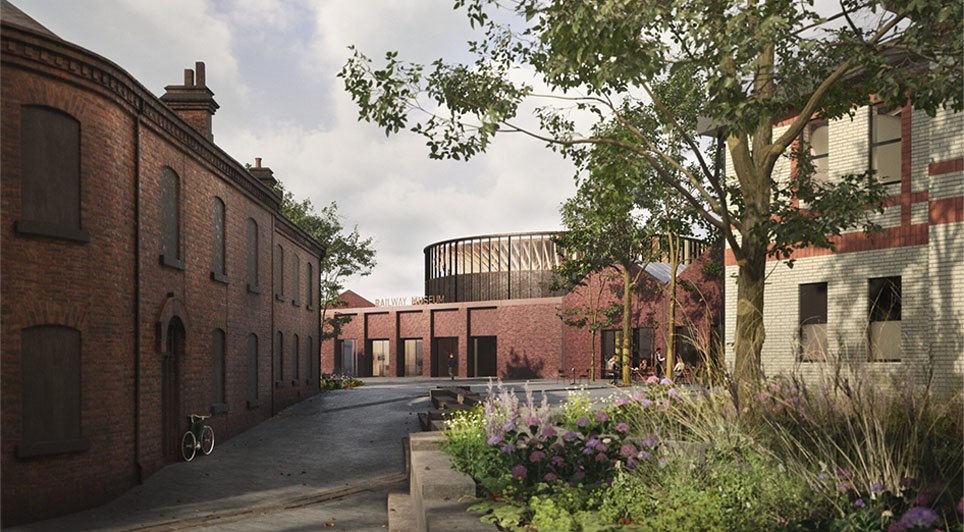
The National Railway Museum in York has signed a contract with GRAHAM to deliver Central Hall, a landmark building intended to transform the visitor experience and create a single, unified entrance to the site.
Designed by award-winning architects Feilden Fowles, the bespoke hall will link the museum's existing buildings and, for the first time, provide level access throughout. It will also add a new gallery, toilets, café and shop. Central Hall forms part of the wider York Central partnership, positioning the museum as the cultural heart of one of the UK's largest urban regeneration projects.
The contract follows the Prime Minister's announcement of an additional £3m to unlock progress after complexities surrounding the 'stopping-up' of Leeman Road, which had divided the museum.
GRAHAM, which previously provided pre-construction services, will now start the main build phase, with completion expected over the next two years.
Craig Bentley, Director of the National Railway Museum, said: "Central Hall is more than a new building – it is a bold, future-facing statement that embodies the Railway Museum's commitment to being 'Open for All' and sets a new sustainability benchmark for the site. I cannot wait to see this landmark new space emerge from the ground as we begin our next chapter as the world's gateway to the past, present and future of railways."

Designed to explore rail's future as well as its past, Central Hall will feature dynamic interpretive spaces including Railway Futures: The Porterbrook Gallery, highlighting how emerging technologies are shaping the next era of rail.
Edel Millar, Masterplan Project Director, said: "Central Hall represents a transformational moment for the National Railway Museum. It will create a more welcoming, accessible and intuitive experience for visitors, bringing together the museum's historic buildings through a seamless journey and providing greatly improved facilities for everyone who visits. The design draws inspiration from the museum's rich railway heritage while embracing modern, sustainable principles. It demonstrates how thoughtful architecture can respect the past, meet the needs of today's visitors and support our ambitions for a more environmentally responsible future."
Julian Donnelly, Contracts Manager at GRAHAM, said: "Reaching the main construction phase is a significant milestone for Central Hall and we are proud to continue our partnership with the National Railway Museum on such an important project.
"This landmark development will create a welcoming and accessible gateway for visitors while celebrating the rich heritage and future innovation of Britain's railways. Our team is committed to delivering a high-quality, sustainable building that will serve generations of visitors and become a key part of the museum's transformation."
Feilden Fowles' circular design, clad in recycled copper with high, glazed ceilings and timber radials, references historic locomotive roundhouses. Sustainability is embedded from the outset, with a highly efficient building envelope, natural ventilation and carefully controlled daylighting to create comfortable spaces while reducing energy demand.
This approach is especially important in the new Futures Gallery, where conditions for visitors and collections must be balanced. A fabric-first strategy, alongside the use of natural light and ventilation, aims to deliver stable conditions for objects and a pleasant environment for visitors, while limiting reliance on energy-intensive systems.