UK
UK Ireland
 Scotland
 London

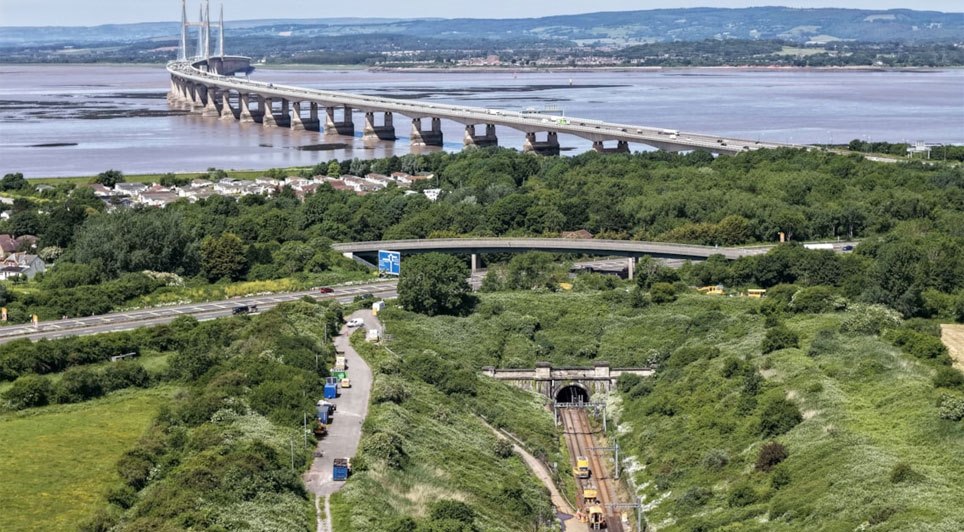
Network Rail's £23m, world-first overhead line system has been installed during a 16‑day closure to combat corrosion in the Severn Tunnel, with extra drainage, track and station works delivered around Bristol.
Train services have resumed through the Severn Tunnel after Network Rail finished a pioneering £23 million programme to boost reliability on one of Britain's most critical cross-border routes between South Wales and England.
Over a 16‑day blockade from 23 May, Network Rail and contractor ARQ (AmcoGiffen, REL and QTS) completed a full upgrade of overhead line equipment and power supply within the 4.35‑mile tunnel beneath the Severn Estuary. Around 250 engineers worked continuously to deliver the scheme, with the railway reopening on Tuesday 9 June.
Electrification exposed the tunnel's uniquely harsh conditions — saltwater, moisture and a highly corrosive atmosphere — which accelerated wear through bi‑metallic corrosion. In response, engineers designed a simplified new overhead line system tailored to the environment, using modified bridge arms and a continuous copper contact wire to improve resilience and cut future maintenance needs. Following a successful 2025 trial on the Cardiff‑bound line, installation has now been completed on the Bristol‑bound side — the first large‑scale deployment of this solution anywhere in the world.
The project included:
- Replacing 838 overhead line support arms
- Installing 14,000 metres of new wiring
- Installing more than 7km of single copper contact wire supported by modified bridge arms
- Removing and renewing 7,200 metres of ageing equipment throughout the tunnel
The upgrade is expected to improve reliability for both passenger and freight services through the tunnel, reinforcing a vital connection between Wales and England for years to come.
Nick Millington, Route Director at Network Rail Wales and Borders, said: "The Severn Tunnel is one of the most challenging environments anywhere on the UK rail network, so completing this upgrade is a significant achievement for everyone involved.

"Following a successful trial last year, we've now delivered a world-first engineering solution at scale, designed specifically to withstand the uniquely harsh conditions inside the tunnel. This is the result of years of innovation, planning and collaboration between Network Rail and our industry partners to solve a long-standing challenge on a vital rail link between South Wales and England.
"Investing in innovative solutions like this helps us build a more resilient and reliable railway for the future. By reducing the impact of corrosion and the need for maintenance, this new system will help keep passengers and freight moving on a route that plays a crucial role in connecting communities, supporting businesses and driving economic growth on both sides of the border.
"I'm incredibly proud of the hundreds of colleagues and contractors who worked around the clock to deliver this complex upgrade safely and successfully. I'd also like to thank passengers, freight operators and local communities for their patience and understanding while we carried out this essential work."
Vinny O'Holloran, Operations Director for ARQ, said: "It's been great to see the level of effort and commitment of our 250 strong engineering and delivery team working tirelessly 24/7 for the past 16 days to deliver this vital overhead line renewal in the Severn Tunnel safely and efficiently.
"From working in the extreme heat, to overcoming the uniquely challenging conditions within the Severn Tunnel, our teams have shown outstanding resilience, skill and professionalism to successfully deliver this innovative, world‑first Overhead Line system.
"These essential works will help to create a stronger, more resilient rail infrastructure between Wales and England reducing future disruption to passengers and freight."
GWR's Station Manager for Bristol Parkway and Swindon, Marcus Deegan, said: "We're pleased that trains are now running again between Bristol and South Wales, and we'd like to thank customers for their patience while this important work has been carried out.
"These improvement works help support the reliability of trains using the Severn Tunnel route for years to come, better supporting the local and national economy."
Elsewhere around Bristol, engineers used the closure to deliver resilience works to support current operations and future growth on the Great Western route. Major drainage improvements between Patchway and Pilning saw nearly 200 metres of pipe replaced, a further 700 metres refurbished, and 18 inspection chambers upgraded — addressing long‑standing flooding issues, particularly in the Bristol‑bound Patchway tunnel where water has previously led to speed restrictions. Additional drainage works are planned on the Filton West Chord in the coming months to support the return of regular passenger services on the Henbury line this autumn — for the first time since 1964.
Track renewals totalled more than 1.5km. Within the confined Patchway tunnel, over half a kilometre of track was replaced with 742 new sleepers and 1,800 tonnes of ballast. A further kilometre was renewed between Filton and Patchway, using 2,045 sleepers and 3,000 tonnes of ballast. Engineers also renewed the junction at Filton West Curve and completed track works on the Filton West Chord, enabling Henbury line services to resume this autumn.
At the new Bristol Brabazon station on the former Filton Airfield, teams installed a nine‑piece footbridge using cranes and assembled it on site within 24 hours. Platform construction progressed with coping stones fitted along the platform edge. The station is mainly funded by the West of England Mayoral Combined Authority, with contributions from South Gloucestershire Council, Bristol City Council, North Somerset Council and Great Western Railway, and Network Rail as a key partner. Construction continues, with opening on track for this autumn.