UK
UK Ireland
 Scotland
 London

With sustainability and energy efficiency, not to mention decarbonisation, increasingly taking priority during building design, MEP engineers and architects are coming into conflict as part of an ever-changing air quality landscape. Nowhere is this better highlighted than in the increasing need for louvres to be designed and incorporated into buildings, especially in applications where plant equipment requires effective air intake or exhaust.
Alexandra Davis, Mechanical Associate at Whitecode Consulting, assesses the importance of balancing aesthetics and ventilation and highlights how mechanical and electrical (M&E) design should be incorporated into early planning and decision-making.
At first glance, our latest project looked like it had plenty of space – especially with a large, open, naturally ventilated basement. That would make it perfect for air source heat pumps, right?
However, upon closer inspection, that 'airy' space wasn’t just for the heat pumps; it had to accommodate ventilation for the underground car park, electrical substations, a standby generator, a spa and pool, gym facilities, and multiple plant rooms. Each one comes with its own airflow demands, and they're all competing for the same free area.
What looked like abundant ventilation quickly turned into a game of Tetris, attempting to fit oversized ductwork, louvres, and exhaust routes into a limited envelope – and the implications spill far beyond the basement.
The façade often pays the price
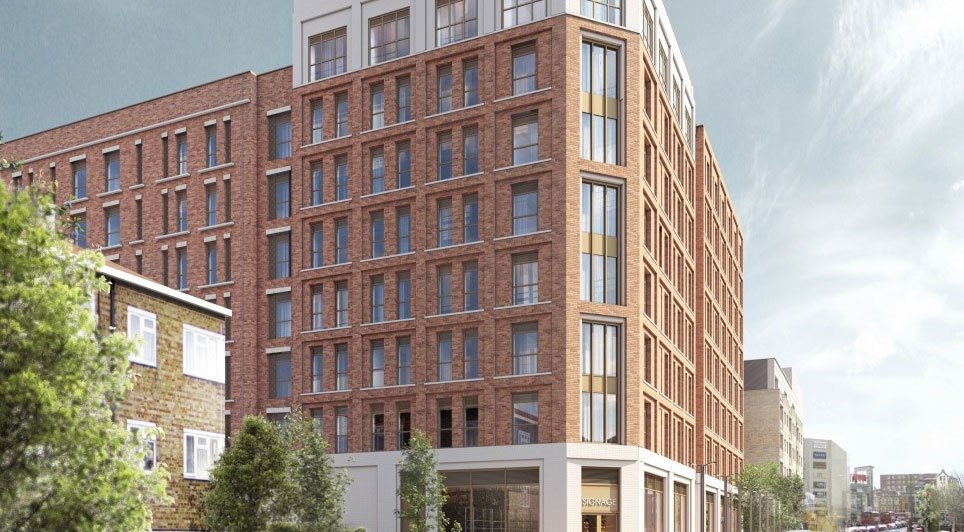
Many across the built environment don’t realise how much pressure additional mechanical and electrical (M&E) demands put on the building façade. For instance, more ventilation requires more louvres. However, façade space is finite, especially when planning permissions demand large glazed areas or impose strict acoustic and aesthetic conditions.
Additionally, more plant equipment means more noise. This can often trigger acoustic requirements, increasing the need to design ventilation openings with attenuators, oversized plenum zones, or acoustic ventilation panels.

There is also the consideration of ductwork, with any increase meaning more coordination challenges. Larger ducts need more space within floor zones, and when vertical risers reach façade levels, they create serious clashes with window positions, curtain walling, or brick detailing.
Finally, more cooling equals larger air source heat pumps. In turn, this means larger heat rejection requirements.
Another key issue is that plant is often being pushed out of view. Put simply, architects, planners, and clients don’t want to see bulky kit on rooftops. Instead, they prefer landscaped green roofs, PV panels, or roof terraces for residents. While they look great, they leave little or no space for mechanical plant. That pushes air source heat pumps downwards, often into basements or internal plant areas.
However, air source heat pumps were never designed for that. They're ideal for installation in open air, with clean airflow and free discharge. When they're squeezed into enclosed basements, it doesn't just increase the need for forced ventilation but also risks compromising lifespan and performance.
So, that puts everyone in a difficult position. The roof is off limits, the basement is overcrowded and the façade is the only place left to breathe – and it's starting to show.
Consequently, the knock-on effect is often that while the façade is supposed to be elegant, clean and high-performing, it ends up being riddled with mismatched louvres, awkward penetrations, or last-minute additions. All of this could have been avoided if M&E was integrated at the very beginning of the design process.
Climate change is turning up the heat
This issue isn't going away; in fact, it's getting worse. Rising external temperatures are pushing more flats into overheating risk zones, and dynamic modelling requirements, such as Part O, are exposing overheating problems in ways that hadn’t previously been flagged at Stages Two or Three.
Furthermore, glazing-heavy designs that are often favoured by planners for daylight and visual impact are amplifying solar gains, and clients are frequently pushing for more amenities, such as gyms, spas, lounges, and communal kitchens, increasing internal heat gains and requiring mechanical ventilation.
The response is larger air handling units, more purge ventilation and the installation of comfort cooling systems, all increasing cooling loads and air source heat pump capacity. It's a feedback loop, so every time plant is upsized, the strain on the façade to accommodate it is increased.
The early incorporation of façade design is vital
Façade planning needs to be moved upstream, with M&E being involved at RIBA Stage Two – not just as space planners but as performance drivers. This means using passive design strategies to reduce mechanical load before any kit is upsized.
For instance, brise soleils and vertical fins should be incorporated to reduce solar gain on glazed elevations, while openable windows with acoustic ventilation panels to support natural or hybrid cooling must also be a consideration.
Similarly, plant spaces must be located in positions that ventilate into low-impact façade zones, and not prime corners of the elevation, and envelope penetrations must be designed with integrated solutions, not just stuck-on louvres at the last minute.
The days of treating M&E as a bolt-on are over; the plant is getting bigger, the cooling loads are increasing, and the façade is bearing the brunt.
If services aren't integrated into façade design earlier, and planned intelligently for rising environmental demands, buildings and building owners will keep paying the price in lost performance, compromised aesthetics and late-stage redesigns.
The solution is obvious – bring everyone to the table early and work cohesively together. Design the façade like every duct, vent, or grille matters. Because it does.