UK
UK Ireland
 Scotland
 London


DMR Training


87-89 Church Street
Construction NVQs, CSCS Cards & Green Skills Training North West
About DMR Training
DMR Training. Helping people build better lives, one skill at a time.
At DMR Training, we get experienced tradespeople qualified without the classroom, the exams or the time off site. You keep working. We gather the evidence. You come out the other side with a nationally recognised construction NVQ and the CSCS card that keeps you on the bigger jobs.
We're here to help, not just to train. If we say we'll do it, we do it. Because every person matters, and every skill learned is a step towards a better future.
Our core values
Say it, do it – Clear, honest, direct. No jargon. No waffle. We keep promises, on time and in full.
Hands-on – Sleeves rolled up. Late-night calls, site visits, paperwork support — we show up and move things forward.
Built around life – Training should fit around shift patterns, school runs and caring duties. Need a different approach? We'll find it.
Outcomes over optics – Real change, not big talk. Jobs landed, promotions earned, paydays made, pride restored.
What we do
Get NVQ qualified in your trade
No exams. No college. No time off the tools. We assess you on site and sign you off in your trade — bricklaying, groundworks, site carpentry, painting and decorating, drylining, roofing and more. Got a couple of years on the job? You're probably most of the way there.
Pick your NVQ level
Level 2 proves your trade and gets you the blue Skilled Worker card. Level 3 takes you into supervising and the gold card. Running the site? Level 6 and Level 7 are for managers chasing the black card. Start where your job is — move up when it calls for it.
Retrofit and insulation NVQs
The work's there and growing. We qualify insulation and retrofit workers — cavity wall, loft, internal and external wall, room-in-roof — so you and your firm can take on ECO4, PAS 2030 and PAS 2035 work. Often fully funded across England.
Upskill your team
Got skill gaps on site? We'll fill them with flexible construction NVQs across the trades — dry lining, painting & decorating, bricklaying, groundwork and fire-stopping — qualifying your existing crew without pulling them off the job.
Claim your CITB NVQ grant
CITB-registered employers could get at least £600 back for every worker put through a construction NVQ. Most firms never claim what they're owed. We'll show you how it works and handle the paperwork with you. Read our full CITB NVQ grants guide.
Check if your NVQ is funded
A lot of workers pay nothing. We've got funding pots covering construction NVQs across Greater Manchester and Greater London, and insulation NVQs across England. Not eligible? Split the fee into four payments of 25%. Check your NVQ funding here.
Consulting for colleges and providers
We back colleges and training providers with Internal Quality Assurance (IQA), centre management and NVQ assessment. Get in touch and we'll tell you straight whether we can help.
Online training courses
Access your courses from anywhere.
Our tutor-led online courses move at your pace, with unlimited review of the content — so it sticks, and your site stays safe and compliant. Cost-effective, quick, no productivity lost.
Reviews & Testimonials for DMR Training

Testimonial by
Michael Loates
Thanks again Steve
Testimonial by
Andrew Pollitt
Testimonial by
Alexandru Dabijevschi
The office team and assessors are reliable and professional. We highly recommend DMR to any business or individual that is looking for training and qualifications. Thank you, DMR!”
Testimonial by
Cristina Lacatus
I’ve been bricklaying now for many years and finally decided to do my NVQ after starting as an apprentice with Henry Boot Construction 30 years ago, and having lost all my papers from then. DMR supported me through the process, and nothing was ever a problem for them”
Testimonial by
Richard Rivelin
Gallery

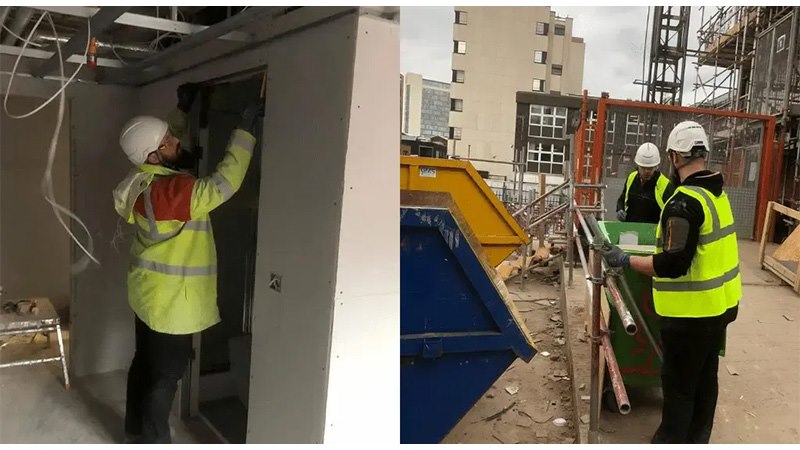

News
Now, if you’ve been on the tools for a while, you’re probably wondering where to go next. We get, we’ve all been there
There are five hands-on installer roles keeping UK retrofit moving, these being Internal Wall Insulation, External Wall Insulation, Framed-Section Insulation, Room-in-Roof, and a retrofit site supervisor who keeps the job running.
These are the guys bringing the Warm Homes plan into the limelight. Warmer homes, lower bills and a proper pay day for you lot.
So let’s make it easy for you. Five roles. And a Construction NVQ that proves you can do it. So let’s take a look, shall we
Internal Wall Insulation
The back room is freezing, no matter how high the thermostat goes. We can’t be having that, can we? You know the problem, the work means fixing insulated plasterboard, or building a stud frame and packing it with mineral wool. This course offers a lot of variation, part insulation, part joinery, part plastering.
You‘re also probably wondering where I would be working, what sort of clients I would be helping fix their lovely home? We’d say solid-wall terraces in older mill towns, council voids being brought up to EPC C, social housing retrofit programmes, and any private homeowner with a draughty back wall
If you want to learn more, take a look at our Internal Wall Insulation NVQ here
External Wall Insulation
It’s the same problem as before, solid walls, no cavity, but a different answer to the issue. Building outwards is the next best thing. Fix boards, EPS, mineral woold or wood fibre to the outside of the house
Both of these courses ensure that you’re the reason owners, tenants and workers will be warm this winter. So, do all us a favour and give yourself a pat on the back.
The main bulk of work will be SHDF (Social Housing Decarbonisation Fund) projects on whole streets at once, work on hard-to-treat homes, and a lot of post-war housing that was never built for the energy bills people pay now.
External wall insualtor sounding like the role for you? Take a gander here for some more details
Framed Section Insulation
Not as popular as Internal or External Wall Insulation, but just as important, and in fact, it’s a good shout to go for this course.
Why? This role lets you work on almost any retrofit job going, whether it’s whole-house retrofits, dormer extensions, timber frame new builds, or heritage work. What do all these buildings have in common? They all need framed section insulation somewhere.
With retrofitting work here to stay, it makes the most sense to look for a course that can cater to almost every aspect of reaching that all important net zero by 2050 goal.
Want to get started on framed section insulation? Check out the course on our website
Room-in-Roof Insulation Installer
It’s extremely common knowledge that lofts and attic places are some of the worst-insulated spaces in UK housing.
Well a Room in Roof insulator puts it right. This construction NVQ offers perfect benefits to families during the awful winter season. You make it so that the heating doesn’t run all evening.
Your clients will absolutely feel the difference, and we tell you what, word of mouth makes all the difference for your business. Referrals and repeat work is such a great incentive.
Every job is a puzzle, and if you like puzzles, take a look at our course here
If you’ve been in the construction industry for a while now, you’ve probably heard some retrofit courses being mentioned.
Whether it’s Loft Insulation, Wall Insulation or Roof Systems, retrofit work is becoming a lucrative opportunity for builders, so why not take a look yourself? Here’s what we have to say about the matter.
What actually are “retrofit courses”?
So, without the jargon, retrofit courses are simply about upgrading buildings to ensure they waste less energy.
It’s a better way to help the environment, as well as keeping people’s bills priced lower. Some of our courses include:
- Underfloor insulation NVQ
- Loft and cold roof insulation NVQ
- Cavity wall insulation NVQ
- Internal wall insulation NVQ and external wall insulation NVQ
- Room-in-roof insulation NVQ
- Damp proofing and timber treatment
- Waterproof roofing systems
- Solar-related roofing work
To put it in simple, plain English, retrofit training allows us to come in and fix the UK’s old housing stock, and improve people’s homes during the winter, so we can bring those energy bills down.
It’s why it’s such a huge issue these days, and why demand for retrofit training courses has increased so drastically, because the UK doesn’t have enough people trained to do this!
Is it stable?
Absolutely. Retrofit courses aren’t going anywhere, and these projects will be in demand for a long time.
Let’s go into further detail.
1. Lots of work, not enough workers
The amount of work needed to upgrade those older homes is estimated in the millions. And the UK doesn’t have the workforce.
We don’t have enough installers, which is a huge red flag.
So that’s where our retrofit courses have stepped in. It’s so easy to get started working on these courses.
At DMR Training, we train people who already have experience working in the construction industry, so you’re already halfway there. You’re stepping into an industry that’s short on labour and in demand. From our perspective, it’s a no-brainer.
2. The work is already happening
This isn’t something that’s happening in the future, it’s happening as you read this post.
Sites across the UK are currently undertaking retrofit jobs, and without taking those retrofit courses and qualifications, you’re missing out on work.
It’s as simple as that.
3. It’s not a short-term issue
The UK won’t suddenly stop caring about energy bills, cold homes and housing stock. It’ll be an ongoing issue for generations to come.
So, upskilling yourself and your workforce will put you on the right path towards success.
What are retrofit jobs really like?
To keep it simple, you’ll still be on site, with your crew, getting the job done. You’ll just have:
- Steady work
- Skills that are in demand nationwide
- Better job security
- A proper career path
- The chance to make a difference
Getting your qualification through retrofit courses matches those industry needs, and let’s face it, chasing jobs is the worst. So, let’s make your life easier.
Final words
Retrofit isn’t replacing construction, it’s upgrading it.
Contractors are simply taking us into the future, and staying skilled is the best way to ensure your business succeeds!
So, take a look at our retr
Don’t worry, we’ve all been there. In fact, a lot of our construction buddies didn’t have a clue either. So let’s clear this up for you.
Here’s our guide to choosing the right construction NVQ for you.
First things first, what do you actually need the NVQ for?
Before even thinking about levels, you need to be clear on why you’re doing the NVQ in the first place.
For most people, it’s one of these:
You need a CSCS card to get or stay on-site
You want to progress in your career and develop yourself
You’re working towards Trust Mark registration
You need to meet PAS 2035 requirements (for retrofit roles like
Retrofit Assessor or Coordinator)
Or your employer/client requires a formal qualification
Once you know the reason, choosing the right NVQ becomes much easier, because the qualification needs to match both your job role and the requirement you’re trying to meet
It’s as simple as that. But a clear thing to understand, if you’ve been working for a while, you’re probably working at a Level 2 or 3 at least.
You might be wondering about exams
Don’t worry there are no written exams, no revision, and no classrooms.
Your NVQ is based entirely around your job role that you do every day. So, if you can do your job well, you’re already most of the way there.
Instead of exams, you’ll complete a simple assessment process that proves your competence in the workplace. This typically includes:
An assessor observing you on-site (or remotely, where applicable)
Completing a short knowledge booklet to cover the required criteria (written/typed/recorded verbally)
Providing photos, videos, and records of your work (past or present)
Professional Discussions with your assessor simply chatting through what you do as your job
Witness testimonies from a supervisor or colleague
So just to reiterate, no classrooms, no final exams, so no panic
What’s the timescale?
People hear “assessment”, “qualification”, “NVQ”, and think themselves getting a qualification will take forever.
It doesn’t!
Achieving your Construction NVQ qualification with us takes about 2-3 months of work. But it all depends on how much work you put in. This means that some individuals take longer or shorter to qualify.
Why DMR Training
Our assessors have worked in construction, they understand what the job actually entails, so we understand that:
They understand the pressure and grind
We don’t overcomplicate things
We’ll guide your through everything you need. Properly
Final Words
To sum everything up, we’re here to get you properly qualified to work onsite, helping you choose the right course for you, ensuring you pass the assessment and get the qualification you need to meet compliance requirements, progress in your career or both!
We know the score, and it’s as simple as that.
If you’re reading this, you’re probably on-site working, but thinking to yourself, “How can I make this process quicker?” At DMR Training, we’re no strangers to people who want a quick step NVQ.
Lots of people prefer to come in, do the work, and come out with their qualification. A clear route to becoming workplace qualified.
So here’s the straightest answer we can give there’s no shortcut but understanding how it works will get you to the end destination quicker than ever.
Let’s break it down for you.
What quick actually means
The harsh truth is that a quick step NVQ is only quick if you are. That’s the blunt truth.
A Construction NVQ isn’t your standard classroom course, it’s a work based learning qualification, meaning your work reflects whether you pass or not.
So “quick” really means:
You’re already doing the work
You’re willing to evidence it properly
You stay engaged with your assessor
You don’t drag your feet on paperwork and photos
If you do that, you’ll be done in no time.
How our Construction NVQs are structured.
When you start your construction NVQ with us, you’ll have an assessor who you’ll report to, but we want to emphasise that they’re not here to catch you out.
They’re here to prove you can already do the job you’re already doing. You’ll just need to prove the evidence.
But what counts as evidence?
This is the main part, whether your quick step NVQ moves either quickly or slowly. These things include:
Onsite Observations: Assessors watch you work, just to confirm your duties are being performed safely and correctly
Photos and Videos: Easy to understand, show us completing tasks, and showing processes. If you need a workmate to take pictures, enlist them in your cause!
Job Logs: Reports, written stuff, anything that proves you can do the job
Witness Statements: A supervisor or manager just to confirm your work
So why do some people finish faster than others?
The qualification doesn’t take time, it’s all down to you.
Now, if you‘re serious about the quick step NVQ, here are some tips to ensure you graduate quickly:
Take a lot of photos
Fill those job logs in as you finish them, not days or weeks later
Communicate with your assessor
Get your employer involved
Remain consistent!
It’s all about attitude, people tend to struggle more if they don’t keep their course consistent.
Let’s face it, nobody loves paperwork, but learners who have the drive, “I want this done, I want my CSCS card, and I want it finished as quickly as possible.” Cross the finish line quicker than others.
The CSCS Card. The Final Prize
Once your portfolio is complete, your assessor is happy, and everything is verified, you’ll gain your construction NVQ (congratulations!)
You can then move on to getting your CSCS Card. It’s all about getting properly recognised as a capable worker, and with this guide, it’ll be a walk in the park.
A final couple of words
To sum up, a quick step NVQ isn’t complicated, you need to be proactive! Because you’re already working onsite, you’re already halfway there, it’s just a matter of consistency.
Let’s get you qualified, book a consultation with us, and we can figure out the best path for you.
Construction companies are currently facing a 140,000-worker shortage, which in turn is disrupting deadlines.
It’s vital to understand the causes, how this is impacting the United Kingdom, and what we can do to prevent this from getting even worse.
What’s caused this mass shortage of skilled workers?
It’s important to note that the United Kingdom has gone through two major changes within the last decade.
BREXIT
Brexit was a huge reason for impacting the construction sector as more than 200,000 EU Workers left the country after it was voted that Britain was to leave the European Union.
This was due to strict visa restrictions being implemented, and many immigrant workers had to leave the country and return home.
Studies revealed that EU Construction workers dropped significantly from 42% to 8% from 2018 to 2021.
Furthermore, due to added bureaucracy, customs checks and longer supply chains, the cost of materials such as steel, cement and timber increased by 60% between 2015 and 2022.
COVID-19
The global pandemic was a large reason why our construction industry has a low-skilled workforce.
Many sites had to shut down due to bankruptcy. 42% of employers that stayed open provided workforce training, meaning that a majority of companies fell behind in training a proper workforce.
On top of this, COVID-19 caused mass delays on projects. Without a properly trained and shortened workforce, it was a monumental task for employers to meet deadlines and goals.
How is this affecting the industry?
An ageing workforce is a major reason for worker shortages. With a majority of workers retiring in the next few years, it’s very difficult for companies to keep up with staff turnover.
The lack of properly trained staff has slowed the projected completion of contracts, resulting in shortened profit margins for businesses, which in turn has put financial pressure on construction firms.
Furthermore, due to a lack of employees, wide skill shortages have plagued the entire industry as skilled workers for specific projects have become far and few between.
Why NVQs, Training and Qualifications are the solution
What’s fantastic about NVQs is that the qualification is gained from on-site training. With new employees working on projects as they learn the trade, it’s extremely beneficial to employers, as it ensures a highly trained worker.
NVQs provide universally recognised qualifications, meaning that every worker is properly recognised on a site. These industry standards are a huge reason why the construction sector has improved since 2011.
Furthermore, NVQs and training allow skilled workers to upskill even more, bridging the gap between wide skill shortages. This also means that it provides employees with a clear and concise career path for those who wish to progress in the construction sector.
Why NVQs are fantastic for career progression
A vital reason why NVQs are fantastic for attracting more workers is their clear career progression that anybody can undertake.
Employers are much more likely to hire workers who meet industry standards. However, to retain those workers, incentives such as responsibility and financial benefits are lucrative to key workers.
NVQs offer opportunities for anybody to progress by undergoing courses to improve their skills, such as supervisory and management roles. Highlighting that construction is a viable career path is important to those looking to support themselves.
How DMR Training Can Help
One of DMR’s specialities is helping individuals gain their NVQs on working sites, learning on the job is extremely vital for employers as it teaches a skilled worker quicker and more effectively. Furthermore, it allows trainees to gain their qualifications quickly.
Additionally, DMR offers a service by helping companies access government funding. This allows more construction firms to upskill established workers or invest in new employees without sustaining financial losses.
On top of this, DMR’s catalogue of courses offers a wide variety of skills that can be learnt and invested in both new and veteran workers. Investing in your own workers is vital for both workplace industry standards and the longevity of your business.
To conclude
The construction industry is facing an uphill battle, but with DMR’s services, investing in workers to ensure they’re universally recognised with their qualifications, helping teach workplace safety, and providing clear career progression and funding for both younger and older employees, is a clear indication of how to
What is the CSCS Card?
A CSCS Card is a mandatory requirement for anybody working on a construction site. It proves to employers that you have the necessary work experience, health and safety knowledge and skills to operate on a site.
How long is a CSCS Course?
That entirely depends on which qualification you’re trying to achieve.
Certain CSCS cards only require a 1-day course. Typically, this is the Health, Safety and Environmental test
However, training for an additional qualification may require a longer period of time to complete the course. These tend to be usually last 2 – 5 working days.
Complex qualifications usually last 2-3 weeks, this is when you’re working towards a full award, or covering multiple trades.
What qualifications do I need for a CSCS Card?
To be eligible for a CSCS Card, you must have passed the CITB Health, Safety and Environment test within the last two years.
It’s also required that you either hold or are working towards completing an NVQ.
Can I get a CSCS without doing a test?
No, it’s a mandatory test required to be completed.
How hard is the CSCS exam?
To pass the exam, you must have 90% of answers correct. That’s about 45 out of 50 questions in total.
It’s typically known that CSCS tests are not as hard, provided you prepare beforehand.
At DMR, we provide a variety of webinars and online resources for those who wish to prepare more for tests more effectively.
Can you take the test at home?
Yes, many courses allow for this but require webcam monitoring.
How hard is the CSCS exam?
To pass the exam, you must have 90% of answers correct. That’s about 45 out of 50 questions in total.
It’s typically known that CSCS tests are not as hard, provided you prepare beforehand.
At DMR, we provide a variety of webinars and online resources for those who wish to prepare more for tests more effectively.
Can you take the test at home?
Yes, many courses allow for this but require webcam monitoring.
What type of CSCS Card do I need?
Different ranks within the industry require individual cards.
Trainee / Apprentice = Red Card
Labourer = Green Card
Skilled Worker = Blue Card
Supervisor = Gold Card
Manager = Black Card
Trainees:
There are different types of red cards within the trainee and apprentice sections.
Five-Year Trainee cards are required for those who are currently attempting to qualify for their NVQ. These are non-renewable as it’s very much expected that those who hold these cards will complete their qualification within 5 years.
Two-Year Trainee cards are provided to individuals who have gained their Level 2 or above within their chosen field, demonstrating their competency. These are only handed out to those who have completed their level 1 within the last 5 years. These are renewable.
These cards are required for the CITB Health, Safety and Environment Test as proof of registration.
Apprentice:
These CSCS cards handed to workers free of charge.
These are recognised for 4 years and 6 months and can’t be renewed. Similarly to trainees, it’s expected that the apprenticeship role will be completed before their red card expires.
Labourer:
A Labourer card is valid for a total of 2 years when first applied. After renewal, they will last for five years in total. Provided you have evidence of your previous role and career.
You shouldn’t apply for this card if you’re a registered skilled worker, as these are only used for unskilled workers only.
Individuals who held a labourer card prior to February 2025 will be eligible for another 5-year card as long as they have evidence to provide
Skilled Worker
These blue cards are valid for a total of 5 years for those who completed their NVQ at level 2 or completed an apprenticeship.
It’s very important to note that all individuals who have applied must first have completed their CITB Health, Safety and Environment test within the last 2 years.
Supervisor
These gold cards are awarded to individuals who have passed their Level 3 -4 NVQ in a construction-related field.
This card is valid for 5 years before having to be renewed.
Manager
Management black cards are presented to individuals who have completed their Construction Management training at a level 4-7 NVQ
How much does a CSCS Card cost?
Prices tend to differ regarding the level and type of CSCS card. That being said, the basic cost to gain a CSCS card is £36 for the application, and £22.50 for the CITB Health, Safety and Environment test.
Level 1 Health and Safety Courses range from £120
Heads Up, Tradespeople: Grandfather Rights Are Ending This December!
If you’re a UK construction worker who’s been riding the Grandfather Rights wave, your time is almost up! From December 2024, those rights are ending, and you’ll need your NVQ qualification to stay in the game. But don’t worry – we’ve got you covered.
WHAT ARE GRANDFATHER RIGHTS?
In case you’ve missed it, Grandfather Rights have allowed experienced tradespeople to work without updated qualifications. Any CSCS cards gained through Industry Accreditation have still been valid. However, this will all come to an end in December.
WHY DOES THIS MATTER?
This change isn’t just about ticking boxes – it’s about being able to show your skills. Employers need to make sure that workers have up-to-date qualifications. Without the right qualifications, you could be missing out on major opportunities – or even be prevented from working on-site.
WHAT DO YOU NEED TO DO?
1. Check Your CSCS Card.
Look at the back of your CSCS card. If it says ‘Industry Accredited’ – it’s time to get sorted.
2. Gain Your NVQ.
This is your chance to prove your skills. We offer a range of NVQs – from Level 2 to Level 6 – so you can get the correct CSCS card.
3. Stay Ahead of the Curve.
Don’t leave it too late – get qualified now, so you can hit the ground running in 2025.
NEED HELP?
Not sure where to start? We can guide you through the process – you just need to Contact us! Whether you need advice on what qualifications you need, or help signing up for an NVQ, DMR Training is here to help you every step of the way.
We know you have the skills, it’s just about transferring them into an NVQ.
With our on-site assessment route, you can gain your NVQ without taking time away from work or losing out on money – result!
The clock is ticking! Don’t let the end of Grandfather Rights leave you without a CSCS card. Get your NVQ with us – and avoid being turned away from job sites.
READY TO GET STARTED?
Want to talk to one of us in person? Call 01942 673047 – someone from our trusty office team will help you find what you need!
Stay safe and stay skilled! ???????
Products & Services
Facebook Feed
Location Map
DMR Training Serves The Following Areas